 Save
Save My cousin called me in a panic three days before her graduation party—she'd promised a homemade cake to forty guests and suddenly realized she had no plan. I'd made this vanilla sheet cake once before for a neighborhood Fourth of July, and it had disappeared so fast that people were scraping the pan. So I talked her through it over the phone, and watching her confidence grow as the cake came together was almost as satisfying as eating it. That's when I knew this recipe wasn't just easy—it was the kind that saves the day and tastes like celebration all at once.
I'll never forget bringing this cake to my daughter's school's senior farewell potluck, still warm in its pan because I'd only just finished frosting it in my kitchen fifteen minutes before. The way the sprinkles caught the light when I set it down on the table, how kids kept coming back for second slices—it turned out that comfort and simplicity is exactly what people want when they're marking a big moment together.
Ingredients
- All-purpose flour (3 cups): The backbone here, and weighing it rather than scooping makes the cake more reliable—I learned that after one dense attempt.
- Baking powder and baking soda (2½ tsp and ½ tsp): Both are doing work, and skipping the soda thinking baking powder alone is enough will give you a cake that tastes faintly metallic.
- Unsalted butter for the cake (1 cup, room temperature): Cold butter won't incorporate smoothly, so pull it out an hour ahead and let it soften on the counter.
- Granulated sugar (2 cups): Creaming the butter and sugar is where the whole cake gets its light, tender crumb, so don't rush those three minutes.
- Large eggs (4, room temperature): Cold eggs will seize up the batter, so if you forgot, set them in warm water for five minutes.
- Vanilla extract (1 tbsp for cake, 2 tsp for frosting): Real vanilla makes a quiet but noticeable difference—the cake tastes like actual vanilla cake instead of vanilla-flavored cake.
- Whole milk (1½ cups for cake, ¼ cup for frosting, all room temperature): Room temperature liquid blends in without startling the batter, creating that tender crumb.
- Powdered sugar for buttercream (4 cups, sifted): Sifting removes lumps that won't dissolve even with beating, and that's the difference between smooth frosting and gritty frosting.
- Unsalted butter for buttercream (1 cup, room temperature): Same as the cake butter—let it sit on the counter, and you'll have frosting that's light instead of heavy.
- Graduation sprinkles or edible decorations: These are the moment where the cake becomes personal, so pick ones that match the colors of the school or the mood of the celebration.
- Gel food coloring (optional): If you use it, a toothpick dab is enough—gel won't add extra liquid the way liquid coloring does.
Tired of Takeout? 🥡
Get 10 meals you can make faster than delivery arrives. Seriously.
One email. No spam. Unsubscribe anytime.
Instructions
- Get your oven ready and prep your pan:
- Preheat to 350°F and line a half-sheet pan with parchment paper—this is not the time to guess at the temperature or skip the parchment, because you'll either have a dry cake or frosting that's sliding off the edges. Greasing the pan under the parchment keeps everything anchored.
- Mix your dry ingredients separately:
- Whisk flour, baking powder, baking soda, and salt in a medium bowl and set it aside—this makes sure everything is evenly distributed, which is how you avoid pockets of baking soda that taste metallic. It's a small step that makes a big difference.
- Cream butter and sugar into clouds:
- Beat them together for a full three minutes until the mixture is pale and fluffy—you're incorporating air here, which is what makes the cake tender instead of dense. If you're in a hurry and only beat it for a minute, the cake will sense it and retaliate by being heavy.
- Add eggs one by one:
- Beat each egg in completely before adding the next one, then mix in the vanilla extract—this gradual method keeps the batter from breaking, which sounds dramatic but is actually important. If your batter ever looks curdled or separated, you've added a cold egg, but keep going anyway because it'll come together once you add the dry ingredients.
- Alternate dry and wet in three additions:
- Start with half the flour mixture, then half the milk, then the rest of each—this prevents overmixing, which is how a tender cake becomes tough. Mix on low and stop as soon as you see no white streaks of flour.
- Pour and spread:
- Spread the batter evenly in the prepared pan, using a spatula to get into the corners—an uneven cake will bake unevenly, so take thirty seconds to make sure the batter is level. An offset spatula makes this easier, but the back of a spoon works too.
- Bake until a toothpick comes out clean:
- Start checking at 28 minutes, because ovens vary and a dry cake is worse than an underbaked one—a minute or two under is still moist, but a minute or two over is regrettable. The cake should smell deeply vanilla-y and look golden, not pale.
- Cool completely before frosting:
- Leave it in the pan on a wire rack until it's room temperature—frosting warm cake is how you end up with frosting soup. If you're in a hurry, you can speed this up by putting the pan in the refrigerator for twenty minutes, but don't skip the cooling step entirely.
- Make the buttercream:
- Beat the room-temperature butter until it's creamy, then gradually add the sifted powdered sugar while mixing on low to avoid a sugar cloud—once it's mostly combined, add vanilla, milk, and salt, then beat on high for two to three minutes until it's fluffy and pale. The milk loosens it just enough to spread smoothly, and the two-minute beating makes it light instead of dense.
- Spread and decorate:
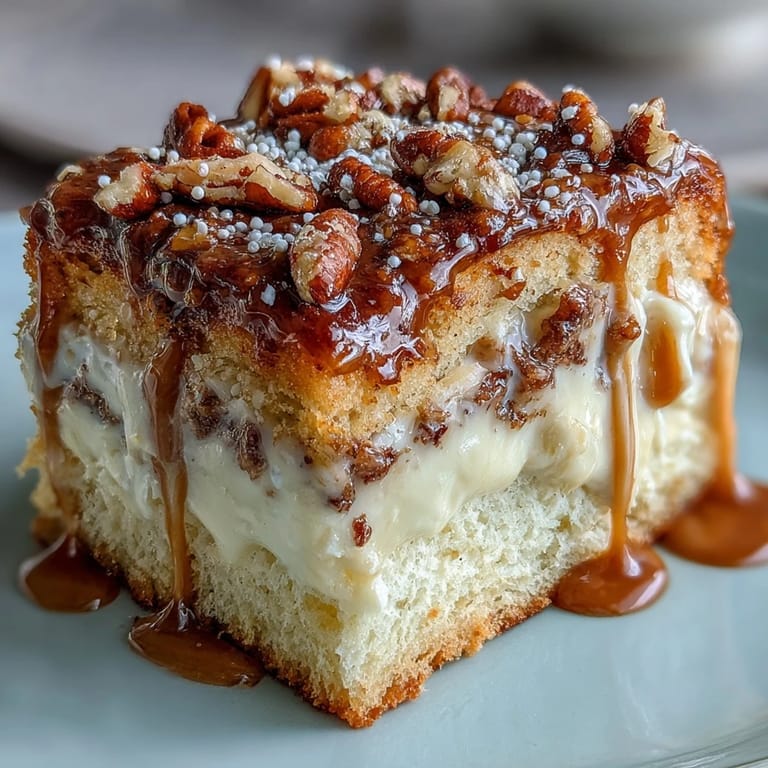
- Apply an even layer of buttercream to the cooled cake using an offset spatula or the back of a spoon, then scatter the sprinkles while the frosting is still soft so they stick—if you wait until it sets, they'll slide around. This is the fun part, and it's where the cake becomes a celebration.
 Save
Save The moment I'll treasure most is when my nephew, home from college for graduation, carved out a piece of this cake and sat down at the kitchen counter while my sister and I cleaned up around him. He didn't say anything elaborate, just closed his eyes on that first bite, and it struck me that sometimes food doesn't need to be complicated to mean something—it just needs to show up when it's needed. That cake was there for all of it: the joy, the accomplishment, the gathering of people who mattered.
Why This Cake Works for Big Crowds
Sheet cakes are honest—they don't pretend to be more than they are, and that's their strength. You can frost it in the pan, slice it straight from where it bakes, and people can grab a piece without anyone having to perform the delicate surgery of layer cake plating. The vanilla flavor is understated enough that it disappears into the background, letting the occasion be the star.
Making It Your Own
The base cake is flexible in ways that fancy cakes aren't—I've added almond extract for something unexpected, and a friend of mine swirled in lemon zest and got something entirely different that still tasted like celebration. The buttercream takes gel coloring beautifully if you want school colors, or you can pipe a border and a message in a different shade. The sprinkles matter less than the confidence that you're serving something made by hand for people you care about.
Storage and Timing
I've kept this cake at room temperature covered with plastic wrap for a full day without it drying out, which is a gift when you're coordinating a party. If you need it to last longer, the refrigerator extends its life to four days, though the buttercream will be firmer straight from the cold. For a party, you can bake the cake a day ahead, frost it the morning of, and add the sprinkles an hour before serving for maximum impact.
- Make the cake the day before if you want one fewer thing to do on party day—it actually tastes slightly better the next day once the crumb has settled.
- Frost the cake in the morning and refrigerate it loosely covered so the frosting sets up and the cake stays moist.
- Add decorations and sprinkles close to serving time so they stay bright and colorful instead of getting absorbed into the frosting.
 Save
Save This cake has become my go-to for any moment worth celebrating, and it's taught me that the most meaningful food isn't the most complicated—it's the food that shows up reliably, tastes good, and lets people focus on each other instead of on how fancy the dessert is. Make it, frost it, gather people around it, and watch it disappear.
Recipe Questions
- → What type of flour is used in this cake?
All-purpose flour is used to achieve a tender crumb and balanced texture.
- → Can I add flavors besides vanilla?
Yes, adding ½ tsp almond extract to the batter enhances the flavor profile.
- → How do I ensure the cake stays moist?
Mixing the batter gently and avoiding overbaking helps keep the cake moist and tender.
- → What is the best way to decorate the cake?
Use vanilla buttercream for spreading and add graduation-themed sprinkles or food coloring for personalization.
- → Can this cake accommodate dietary needs?
For gluten-free options, substitute all-purpose flour with a 1:1 gluten-free baking blend.