 Save
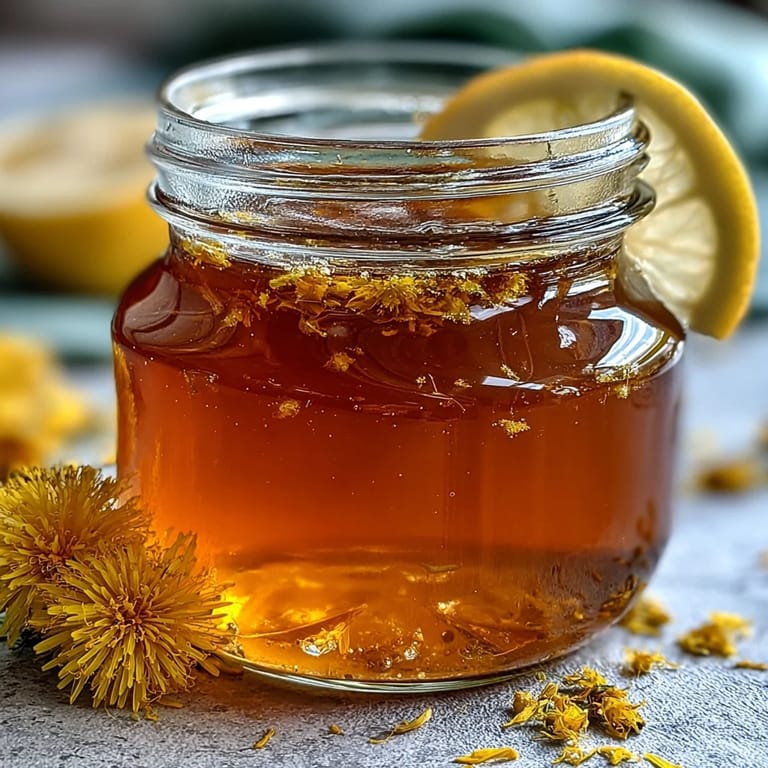
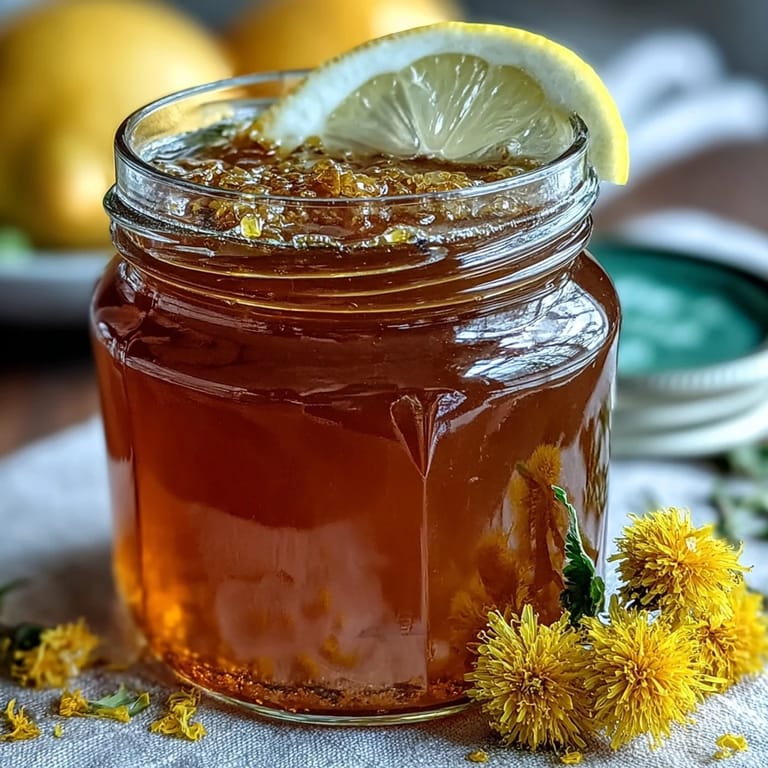
Save My neighbor's yard had gone wild with dandelions that spring, and instead of lamenting the weeds, she challenged me to turn them into something edible. Standing in her overgrown garden with scissors in hand, I felt ridiculous at first—collecting bright yellow flowers like some kind of forager—but the moment I brought them inside and started simmering those petals, the kitchen filled with this unexpected floral sweetness that made me understand why she'd been so excited. This dandelion jelly became the bridge between her messy lawn and my neat kitchen, a small reminder that sometimes the best ingredients are hiding in plain sight.
I remember spreading this jelly on a scone for my sister during an afternoon tea she'd organized, watching her close her eyes on that first bite like she was transported somewhere. She asked for three jars to take home, and suddenly I wasn't just making jam—I was creating something people actually wanted to keep around. That moment made me realize preserving is less about food safety and more about giving people small jars of good memories.
Ingredients
- Dandelion petals: Pick only the yellow bits from pesticide-free areas, and yes, you need to remove every bit of green sepal or your jelly will taste bitter and grassy.
- Water: This becomes your base, extracting all the floral essence from those petals as they steep.
- Fresh lemon juice and zest: The brightness cuts through the floral sweetness and keeps the jelly tasting fresh rather than cloying.
- Honey: Adds depth and a rounded sweetness that granulated sugar alone can't achieve.
- Granulated sugar: Essential for both sweetness and the gelling process; don't try to reduce it or the texture suffers.
- Powdered fruit pectin: This is your insurance policy for a proper set, especially important with delicate floral preserves that don't have natural pectin like berries do.
Tired of Takeout? 🥡
Get 10 meals you can make faster than delivery arrives. Seriously.
One email. No spam. Unsubscribe anytime.
Instructions
- Gather and prepare your petals:
- Rinse the dandelion heads gently and pat them dry with a clean kitchen towel. This is tedious work—sit down with a bowl and methodically pinch off each green sepal, keeping only the sunny yellow petals; it takes patience but makes the difference between delicate jelly and bitter disappointment.
- Create your floral tea:
- Combine petals and water in a medium saucepan, bring to a boil, then lower the heat and let them simmer gently for 10 minutes. After removing from heat, let the petals steep undisturbed for 30 minutes so all that floral magic can infuse into the water.
- Strain with care:
- Pour everything through a fine mesh sieve or cheesecloth, pressing gently on the petals to coax out every drop of golden liquid. You're aiming for about 3 to 3 1/2 cups of dandelion tea; what you yield matters for the final set.
- Build your flavor base:
- Return the strained dandelion tea to your saucepan and stir in the lemon juice, lemon zest, and honey until everything dissolves together. This is when your kitchen starts smelling like something between spring and comfort.
- Introduce the pectin:
- Whisk the powdered pectin into the mixture, breaking up any lumps, then crank the heat to high and bring it to a rolling boil, stirring constantly. You'll feel the mixture start to thicken almost immediately.
- Add sugar and commit to the boil:
- Pour all the sugar in at once and stir continuously until the mixture returns to a full, hard boil—the kind where big bubbles break the surface. Maintain this boil for 1 to 2 minutes, then remove from heat immediately.
- Finish and jar:
- Skim off any foam with a spoon, then ladle the hot jelly into your sterilized jars, leaving 1/4-inch headspace. Wipe the rims clean, seal with lids and bands, then process in a boiling water bath for 5 minutes to ensure they set properly and store safely.
 Save
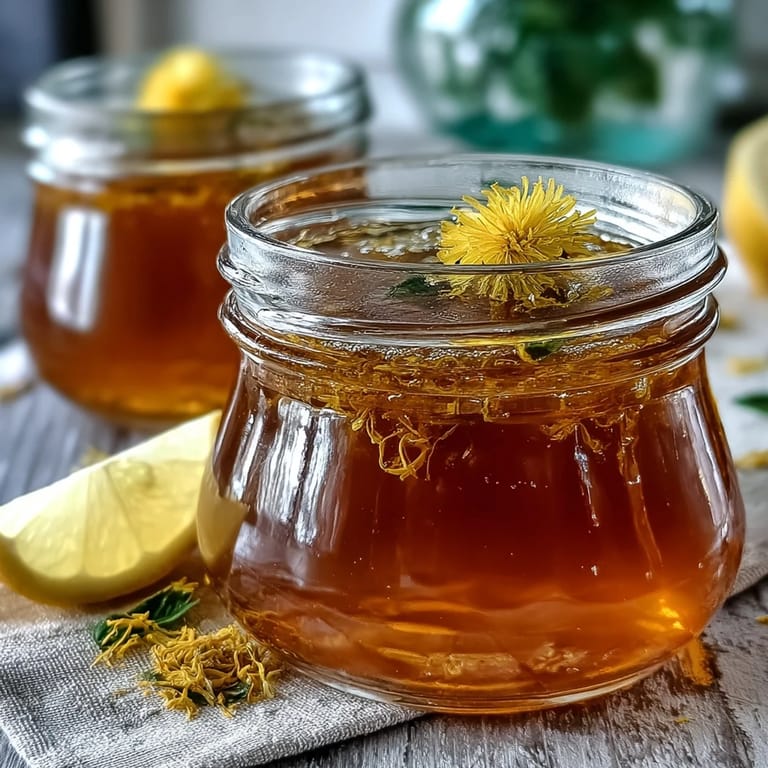
Save There's something almost magical about opening a jar of dandelion jelly in the middle of winter and tasting that captured sunlight from months before. My mother keeps a jar in her pantry and brings it out when anyone visits, and I've watched it become this little ambassador of my kitchen, a conversation starter that leads to stories about yards and foraging and how food connects us to seasons we've already passed through.
The Art of Flower Foraging
Picking dandelions for jelly teaches you to look at your surroundings differently, to see potential in what most people dismiss. The best time to gather is in late morning after the dew has dried but before the heat of afternoon, when the flowers are open and bright. I've found that dandelions at the edges of yards taste better than those in the thick of it, probably because they've had more sun and less competition for resources, but honestly any dandelion from a clean area will give you beautiful results.
Setting and Storage Secrets
The gel point is the moment when your jelly goes from liquid to spreadable, and it happens faster than you'd expect once you remove it from heat. I always do the wrinkle test—dropping a tiny spoonful on a cold plate, letting it cool for a minute, then pushing it with my finger to see if it wrinkles slightly. If it does, you're done; if it flows, you may need to return to heat briefly, though this is rare with proper pectin and technique.
Serving and Sharing Ideas
This jelly is elegant enough for a fancy breakfast but humble enough for weeknight toast, which makes it the kind of preserve that actually gets used instead of sitting pretty on a shelf. I've layered it into yogurt parfaits, swirled it into vanilla cake batter, and even melted it slightly to glaze roasted vegetables with surprising success. The floral quality pairs beautifully with soft cheeses, makes scones feel like a celebration, and transforms a simple butter-and-jam breakfast into something that feels intentional and special.
- Serve small jars as gifts with a note about where you foraged the dandelions.
- Try mixing a spoonful into cream cheese for an elegant tea sandwich spread.
- Keep several jars in your pantry so you're never without a bright, homemade topping for unexpected gatherings.
 Save
Save Every jar of dandelion jelly is proof that the best food comes from paying attention to what's around you and turning it into something worth sharing. Make this when you have time to savor the process, and you'll find yourself making it again and again.
Recipe Questions
- → How do I prepare dandelion petals for infusion?
Carefully remove green sepals and stems, reserving only the vibrant yellow petals, then rinse and gently dry before use.
- → Can I substitute honey for a different sweetener?
Yes, agave syrup works well as a vegan-friendly alternative without compromising sweetness.
- → What is the best method to extract flavors from dandelion petals?
Simmer petals in water, then steep for 30 minutes to release the bright floral notes before straining.
- → How long should the jelly set after processing?
Allow up to 24 hours for full setting after the jars have cooled.
- → What tools are essential for preparing this spread?
A fine mesh sieve or cheesecloth for straining, medium saucepan for cooking, and sterilized jars with lids for preserving are recommended.