 Save
Save My cousin's daughter was turning seven, and her mother asked if I could bake something special for her First Communion celebration. I'd never made fondant toppers before, but the image of tiny rosaries adorning delicate cupcakes felt like exactly what the moment needed. Standing in my kitchen that morning, measuring flour with the kind of care you reserve for things that matter, I realized these weren't just desserts—they were little edible prayers.
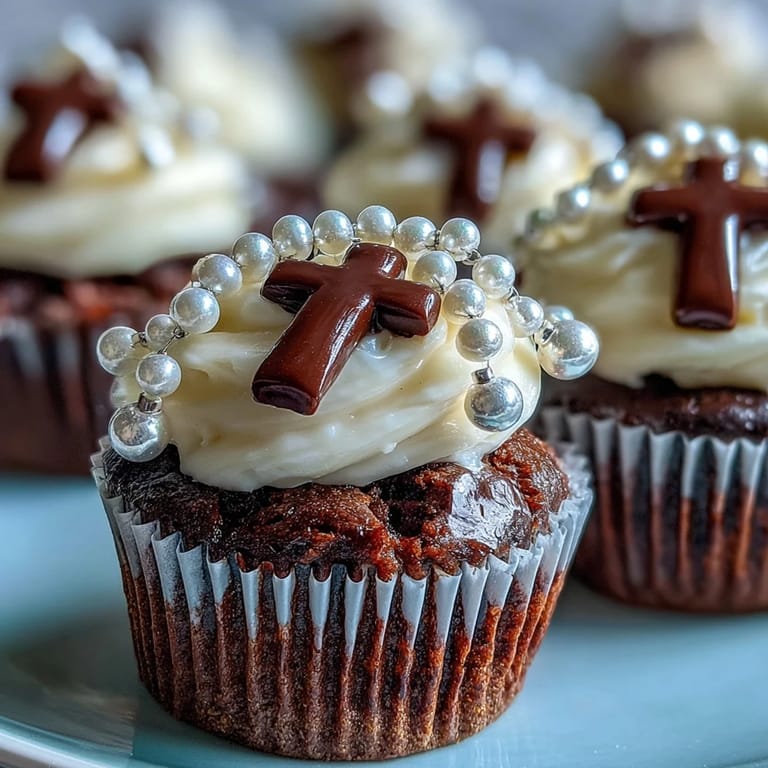
When I finally placed those first rosary-topped cupcakes on a white cake stand in their home, my cousin's eyes filled with tears. Her daughter ran straight to them, mesmerized by the tiny beads and crosses, each one a small gesture of love that took far less time than the moment it created. That's when I understood why people invest in these details—they become the memory.
Ingredients
- All-purpose flour: The foundation of tender crumbs; sifting it isn't necessary but does help distribute the leavening agents evenly throughout.
- Granulated sugar: Creaming this with soft butter creates the air pockets that make these cupcakes light rather than dense.
- Baking powder and baking soda: A small amount of soda deepens the vanilla flavor while the powder provides lift; use both for the best rise.
- Unsalted butter: Room temperature butter mixes smoothly and incorporates air better than cold butter straight from the refrigerator.
- Eggs at room temperature: Cold eggs won't blend properly into the batter, so pull them out while you're preheating the oven.
- Whole milk: The small amount keeps the batter tender; any milk temperature works, though room temperature integrates most seamlessly.
- Vanilla extract: Pure vanilla is worth the cost here; the cupcakes are simple enough that quality ingredients truly shine through.
- Powdered sugar for frosting: Sifting removes lumps and guarantees smooth, lump-free buttercream that pipes beautifully.
- White fondant: Pre-made fondant saves hours and produces professional results; if you can't find it locally, it ships easily online.
- Edible pearls: These add dimension and catch light on the rosary; pastel versions coordinate with any color scheme.
Tired of Takeout? 🥡
Get 10 meals you can make faster than delivery arrives. Seriously.
One email. No spam. Unsubscribe anytime.
Instructions
- Get your station ready:
- Preheat your oven to 350°F and line the mini muffin tin while it heats. Having everything prepared before you start mixing means you won't scramble when the batter is ready to bake.
- Mix the dry team:
- Whisk flour, baking powder, baking soda, and salt together in one bowl. This distributes the leavening evenly so every tiny cupcake rises at the same rate.
- Cream butter and sugar:
- Beat softened butter with sugar for 2 to 3 minutes until the mixture turns pale and fluffy, almost like pale frosting. This creaming step is where the lightness begins; don't skip it or rush it.
- Introduce the eggs gently:
- Add eggs one at a time, beating well after each one so the batter stays emulsified and smooth. If you add both at once, the mixture may look curdled, though it usually comes together once you add the dry ingredients.
- Build the batter carefully:
- Alternate adding the dry mixture and milk in two parts each, starting and ending with the dry ingredients. Mix gently—overworking at this stage toughens the cupcakes, so stop as soon as no flour streaks remain.
- Fill with intention:
- Divide batter evenly among the 24 liners, filling each about two-thirds full. Using a small ice cream scoop keeps portions consistent so all your cupcakes bake at the same speed.
- Bake until golden:
- Watch them around 12 minutes; they're done when a toothpick inserted into the center comes out clean and the tops are barely golden. Mini cupcakes bake faster than standard ones, so check earlier rather than later.
- Cool with patience:
- Leave them in the pan for 5 minutes so they set, then transfer to a wire rack to cool completely. Frosting warm cupcakes melts the buttercream, so plan ahead or chill them briefly if you're pressed for time.
- Prepare the frosting:
- Beat softened butter until creamy, then gradually add sifted powdered sugar while mixing to avoid lumps. The gradual addition lets the sugar incorporate smoothly without creating a grainy texture.
- Achieve the right consistency:
- Add vanilla, salt, and milk a little at a time until the frosting reaches a spreadable but sturdy texture that holds peaks. If it seems too soft, chill it briefly before piping.
- Frost with precision:
- Use a piping bag fitted with a small round tip for neat swirls, or a small offset spatula for a rustic finish. Either way, a light hand keeps the frosting from flattening the delicate cupcakes.
- Create the fondant beads:
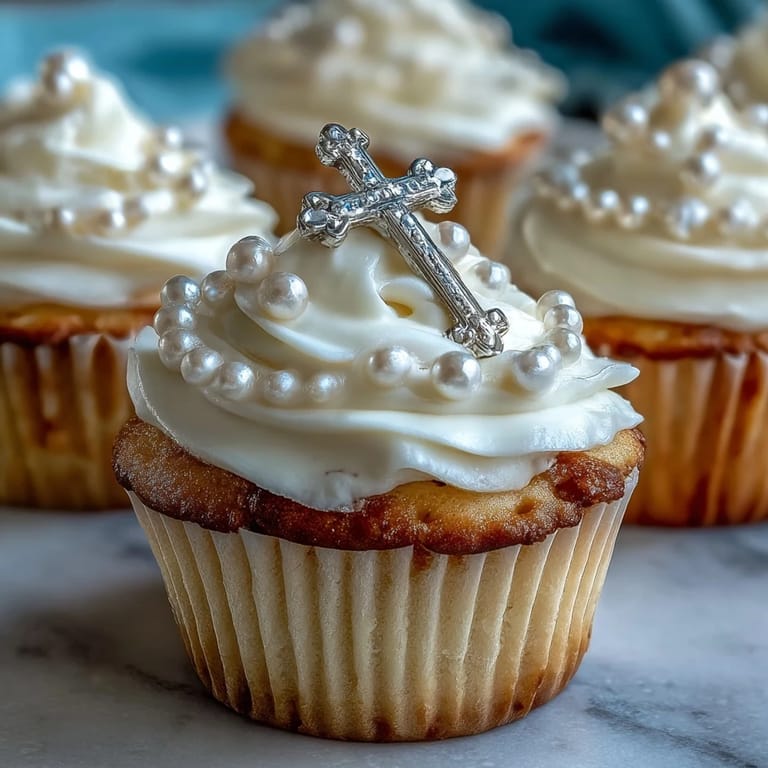
- Roll fondant into small balls between your palms, then arrange them in a short rosary chain shape using a damp brush to stick them together. Work quickly so the fondant doesn't dry out and crack.
- Shape the cross:
- Cut or form a small cross from fondant and attach it to the end of your bead chain with a tiny dab of water or edible glue. The cross is the anchor point of the entire topper.
- Let fondant set:
- Set the rosaries aside on parchment for at least an hour so they firm up enough to handle without sagging. If you place them on warm frosting, they'll soften and shift out of place.
- Add the finishing touch:
- Just before serving, crown each frosted cupcake with its fondant rosary. This timing keeps the topper crisp and prevents the fondant from absorbing moisture from the frosting.
 Save
Save Months later, my cousin sent a photo of her daughter wearing her new First Communion dress, holding a cupcake with its tiny rosary topper. That single image reminded me that baking for milestones isn't about perfection—it's about showing up with intention.
Customizing Your Rosaries
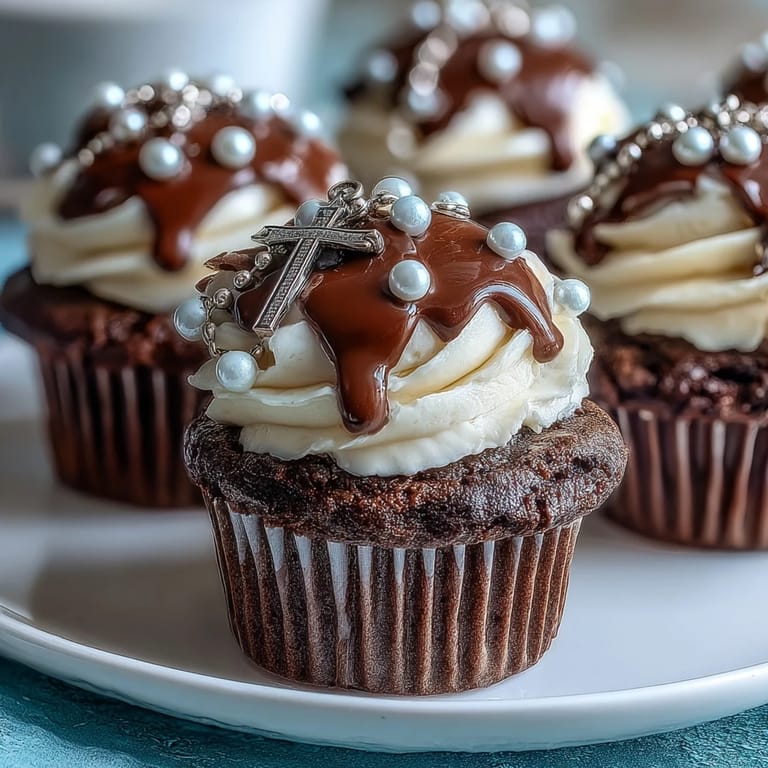
The beauty of fondant toppers is that they're infinitely adaptable to the person being celebrated. I've made white rosaries for traditional ceremonies, but I've also tinted fondant in soft pastels—blush pink, pale blue, even champagne gold—to match a child's personality or the party color scheme. The same technique works for other religious symbols or celebrations; I've shaped tiny crosses, stars, and even delicate flowers using the same rolling and shaping methods.
Making Ahead for Less Stress
The cupcakes themselves are forgiving to bake a day or two early; wrapped in an airtight container, they stay moist and tender. Frost them the morning of your event, then add the fondant rosaries just before serving or setting up the dessert table. This staggered approach means you're not juggling everything at the last minute, which is especially helpful when you're also managing a celebration.
Small Tweaks That Make a Difference
Once you've made these once, you'll start noticing small adjustments that feel right for your kitchen. Some bakers swear by adding a splash of almond extract alongside the vanilla for extra depth, while others prefer to leave it purely vanilla so the fondant becomes the flavor story. I've also experimented with a tiny pinch of lemon zest in the batter—not enough to taste lemon, but enough to brighten the vanilla in a way that feels almost sacred in its subtlety.
- If your fondant toppers crack while drying, the air in your kitchen is too dry; loosely cover them with plastic wrap while they set.
- Edible pearls come in various sizes; using a mix of medium and small beads creates visual interest on each rosary.
- Keep extra fondant in an airtight container so you can reshape any pieces that don't turn out perfect on the first try.
 Save
Save These cupcakes exist in that rare space where they're simple enough to feel achievable but special enough to mark a moment worth remembering. Bake them with an open heart, and they'll become more than dessert.
Recipe Questions
- → What type of flour is best for the cupcakes?
All-purpose flour ensures a light yet sturdy crumb that holds the shape of the mini cupcakes well during baking.
- → How can I achieve a smooth buttercream?
Beat softened butter until creamy before gradually adding powdered sugar and milk, ensuring a fluffy, smooth texture.
- → Can I color the fondant decorations?
Yes, using food coloring allows you to create pastel shades like pink, blue, or gold for personalized fondant rosary toppers.
- → What is the ideal baking temperature and time?
Bake the mini cupcakes at 350°F (175°C) for 12–15 minutes or until a toothpick comes out clean for perfect doneness.
- → How to shape the rosary fondant toppers?
Roll fondant into small beads, form a short chain, and use a small cutter or knife to create the cross, attaching all pieces with a damp brush.
- → Are there any allergen considerations?
These cupcakes contain eggs, milk, and wheat. Fondant may have traces of nuts or soy; almond extract substitution may add tree nuts.