 Save
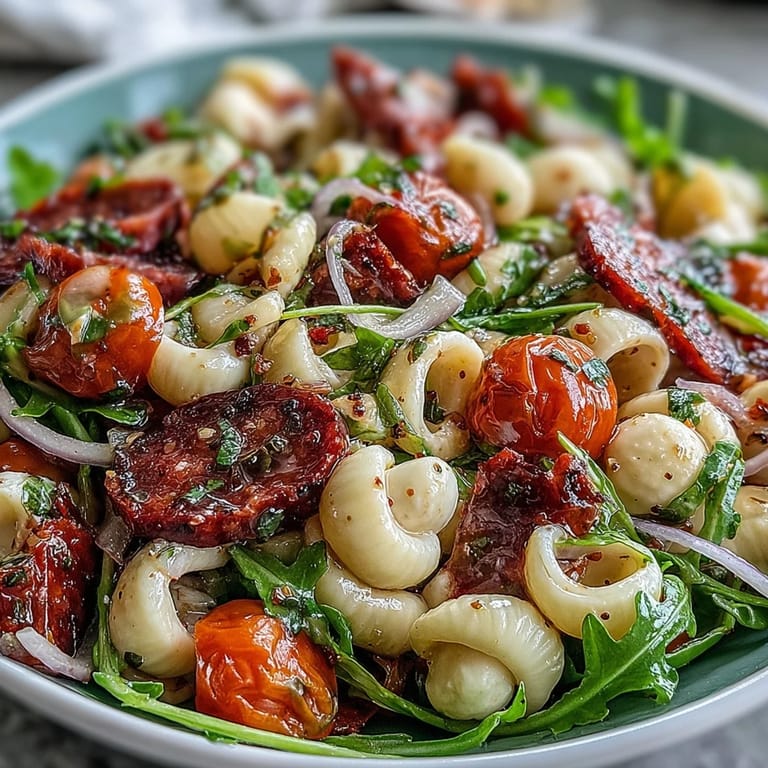
Save I stumbled onto this pasta salad completely by accident one March afternoon when my fridge was nearly empty except for a jar of giardiniera, some leftover salami, and a bag of ditalini I'd bought on impulse. My neighbor had just texted asking if I wanted to bring something to a casual Sunday lunch, and I found myself tossing everything together with a quick vinaigrette, wondering if it would even work. Twenty minutes later, people were asking for the recipe—turns out that tangy, peppery combination was exactly what spring was asking for.
The first time I made this for a real crowd, I was genuinely nervous about serving something so simple—no fancy techniques, just good ingredients and timing. But watching people go back for seconds, piling their plates high with those peppery arugula leaves and creamy mozzarella bites, I realized that sometimes the best dishes are the ones that let each ingredient shine without apology.
Ingredients
- Ditalini pasta (300 g): Those tiny tube shapes catch and hold the dressing beautifully, so every bite tastes dressed rather than just coated.
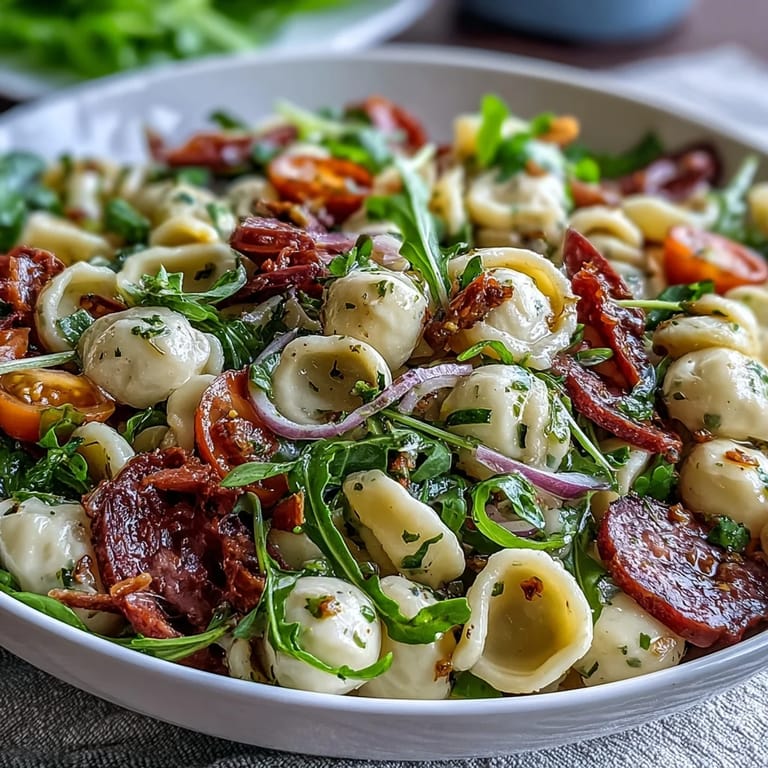
- Fresh arugula (100 g): Don't skip the freshness here—it wilts slightly from the warm pasta and warm vinegar, turning tender but still peppery.
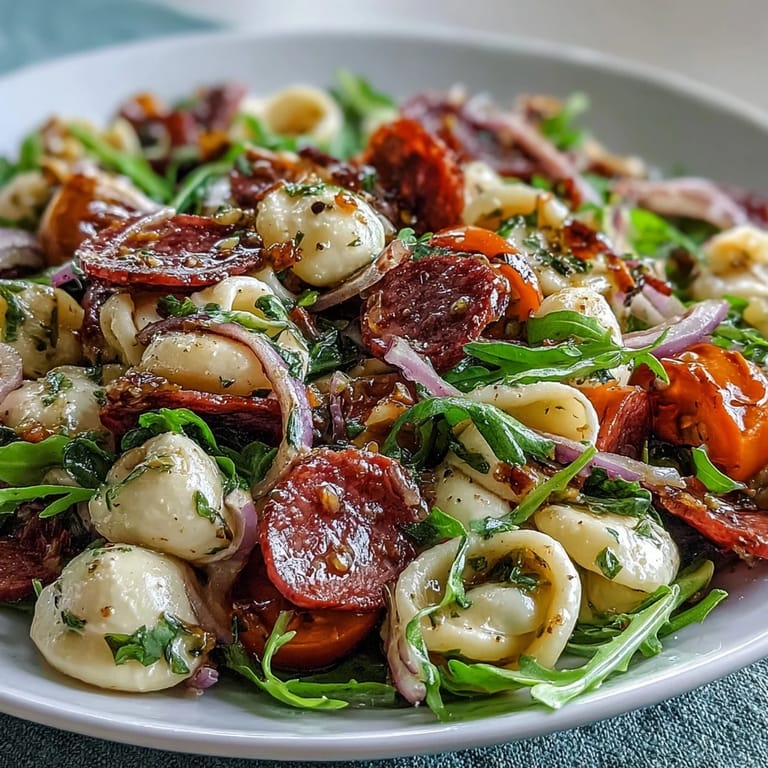
- Salami (120 g): Slice it into thin strips or bite-sized cubes depending on your mood; the fattier varieties add a richness that balances the vinegar.
- Fresh mozzarella pearls or diced mozzarella (150 g): Cold mozzarella against warm pasta is essential, so don't pull it from the warm pantry.
- Pickled vegetables (100 g): This is where the magic lives—giardiniera, pepperoncini, or any Italian mixed pickles add tang, texture, and personality.
- Red onion (1 small): Slice it paper-thin so it softens slightly and becomes sweet rather than harsh against the other flavors.
- Cherry tomatoes (8): Halve them rather than quarter so they don't disappear into the salad, and use the ripest ones you can find.
- Extra-virgin olive oil (4 tbsp): Quality matters here since the oil is doing most of the flavor work; don't save money on the cheap stuff.
- Red wine vinegar (2 tbsp): This is the backbone of the dressing, giving that characteristic tang that makes everything taste alive.
- Lemon juice (1 tbsp): A squeeze of brightness that keeps the vinegar from being one-note.
- Dijon mustard (1 tsp): An emulsifier that brings the dressing together and adds a gentle heat.
- Garlic (1 clove, minced): One clove is usually enough; I learned this the hard way after adding three once and turning everyone away.
- Dried oregano (1 tsp): The Italian spirit of the whole dish lives in this one spoonful.
- Chili flakes (½ tsp, optional): For those who like a whisper of heat lingering on the back of their tongue.
- Salt and black pepper: Season in layers—once in the dressing, once over everything at the end.
Tired of Takeout? 🥡
Get 10 meals you can make faster than delivery arrives. Seriously.
One email. No spam. Unsubscribe anytime.
Instructions
- Get the pasta tender:
- Bring salted water to a boil and cook the ditalini exactly to package instructions—a minute early and it'll be chalky, a minute late and it'll be mushy. Drain and rinse under cold water just long enough to stop the cooking.
- Build the dressing:
- Whisk together olive oil, red wine vinegar, lemon juice, Dijon mustard, minced garlic, oregano, chili flakes if using, and a generous pinch of salt and pepper. Taste it straight from the spoon; it should make your mouth pucker slightly and then smooth out.
- Combine everything:
- Add the cooled ditalini, fresh arugula, salami, mozzarella, pickled vegetables, thinly sliced red onion, and halved cherry tomatoes to a large bowl. Pour the dressing over and toss gently with your hands or two spoons, making sure the dressing reaches all the corners.
- Taste and adjust:
- This is crucial—salt brings out sweetness in tomatoes and helps mozzarella taste creamier, so taste as you go and don't be shy about adjusting.
- Let it rest:
- You can serve it right away while the pasta is still slightly warm, or chill it for up to two hours and toss again just before serving to redistribute the dressing that's settled to the bottom.
 Save
Save There's something almost meditative about making this salad—the way the arugula loosens and becomes tender, how the pickled vegetables' tanginess spreads through the whole bowl, turning something simple into something that tastes like gathering with people. It's become my go-to when I want to cook something that feels generous without feeling stressful.
Why This Became My Spring Signature
Last spring I made this salad three times in one week because different people kept asking about it, and that's when I realized it wasn't just about the flavors—it was about how it made people feel like I'd put real thought into feeding them. The pasta salad sits in that perfect space between substantial and light, exactly what your body wants when the weather starts warming up.
The Dressing Philosophy
I've learned that a good vinaigrette isn't about precision so much as balance—the oil should feel luxurious, the vinegar should make you take notice, and the mustard and garlic should whisper rather than shout. The trick is whisking long enough that the oil and vinegar actually meld rather than just sitting in tense separation, so take your time and let your arm get a little tired.
Make It Your Own
The beauty of this salad is that it's a framework rather than a rulebook—I've made it with roasted red peppers instead of pickled vegetables when that's what I had on hand, and it was just as delicious. The core of what makes it work is the tart dressing against creamy mozzarella and peppery greens, so you can play with the other elements.
- For vegetarians, skip the salami and add marinated artichoke hearts or roasted peppers for that salty, briny element you're missing.
- If you have toasted pine nuts or sunflower seeds lying around, scatter them on at the end for a subtle crunch that makes everything feel more intentional.
- Taste the dressing on its own before tossing—it's easier to adjust when nothing else is involved, and you'll get better at understanding your own preferences.
 Save
Save This salad has taught me that some of the best dishes come from working with what you have rather than waiting for the perfect recipe. Serve it at your next gathering and watch how people light up when they taste it.
Recipe Questions
- → Can I make this pasta salad ahead of time?
Yes! This dish actually tastes better after chilling for 1-2 hours, allowing the flavors to meld together. It keeps well in the refrigerator for up to 3 days in an airtight container.
- → What type of pasta works best?
Ditalini is ideal because its small tube shape holds dressing well. Elbow macaroni, small shells, or orzo make excellent substitutes if you need to adapt based on what's available.
- → Is there a vegetarian option?
Absolutely. Simply omit the salami and add marinated artichoke hearts, roasted red peppers, or sun-dried tomatoes for extra depth and umami flavor.
- → What vegetables can I use instead of giardiniera?
Try pepperoncini, pickled carrots, cauliflower, or even chopped olives. The key is maintaining that tangy, briny element that cuts through the rich cheese and cured meat.
- → How do I prevent the pasta from absorbing all the dressing?
Rinse the cooked pasta under cold water to stop cooking and remove excess starch. Toss with half the dressing immediately, then add the rest just before serving to keep everything vibrant and well-coated.