 Save
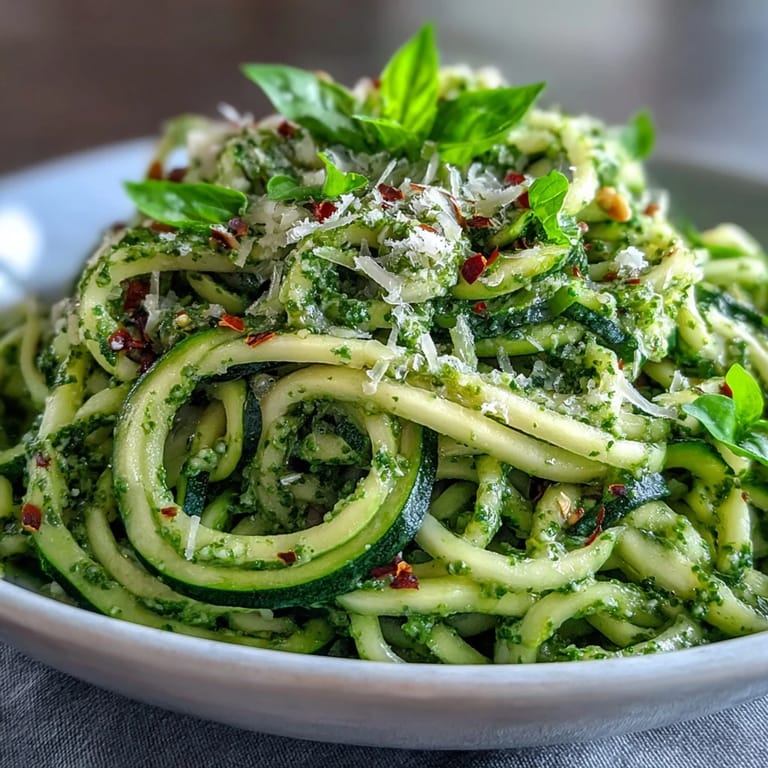
Save My kitchen smelled like summer the afternoon I first made zucchini noodles with pesto, standing at the counter with a spiralizer I'd impulsively bought at a farmers market. A friend had mentioned wanting to eat lighter, and I wanted to prove that skipping traditional pasta didn't mean sacrificing flavor or satisfaction. The basil was so fragrant it practically announced itself before I even opened the food processor lid. What struck me most wasn't the health aspect—it was how quickly everything came together, how the bright green sauce clung to those delicate spirals, and how genuinely happy everyone looked eating something so vibrant.
Last summer I made this for my neighbor who'd just started her garden, and she brought over a basket of basil that was almost overwhelming in the best way. We stood in her kitchen laughing because she kept insisting the pesto needed more basil, more garlic, more everything, and somehow it just kept getting better. That meal became a standing Thursday thing, her zucchini and my enthusiasm for the food processor, until the season ended and we promised we'd do it again next year.
Ingredients
- Fresh basil leaves, packed: Use leaves that smell almost aggressively green and are vibrant without any browning, as this is where all the magic happens in your pesto.
- Zucchinis, medium: The spiralizer works best with zucchinis that are straight and firm, not waterlogged or overgrown, or your noodles will fall apart during cooking.
- Pine nuts: They give a delicate, slightly sweet richness, but walnuts or even sunflower seeds work beautifully if you need a budget-friendly or allergy-friendly swap.
- Parmesan cheese, grated: Freshly grated is crucial because pre-shredded versions sometimes don't melt and incorporate as smoothly into the warm noodles.
- Extra-virgin olive oil: This is the foundation of your pesto, so don't skimp on quality here since it's tasted directly.
- Garlic clove: One is plenty—the pesto should whisper garlic, not shout it, letting the basil stay the star.
- Lemon juice: It brightens everything and keeps the pesto from feeling heavy or one-dimensional.
Tired of Takeout? 🥡
Get 10 meals you can make faster than delivery arrives. Seriously.
One email. No spam. Unsubscribe anytime.
Instructions
- Build your pesto base:
- Throw basil, Parmesan, pine nuts, and garlic into a food processor and pulse until everything is finely chopped but not quite smooth—you want it a little textured. Listen for that satisfying whirring sound to stop and start, don't just let it run continuously or you'll end up with baby food.
- Stream in the oil and lemon:
- With the processor running, pour olive oil slowly while it's still blending, watching the mixture transform from choppy to creamy. Add lemon juice the same way, and you'll smell the brightness hit the air instantly.
- Season and taste:
- Give it a taste and adjust salt and pepper thoughtfully—Parmesan is already salty, so go gentle and build from there. This is the moment to trust your palate.
- Spiralize your zucchini:
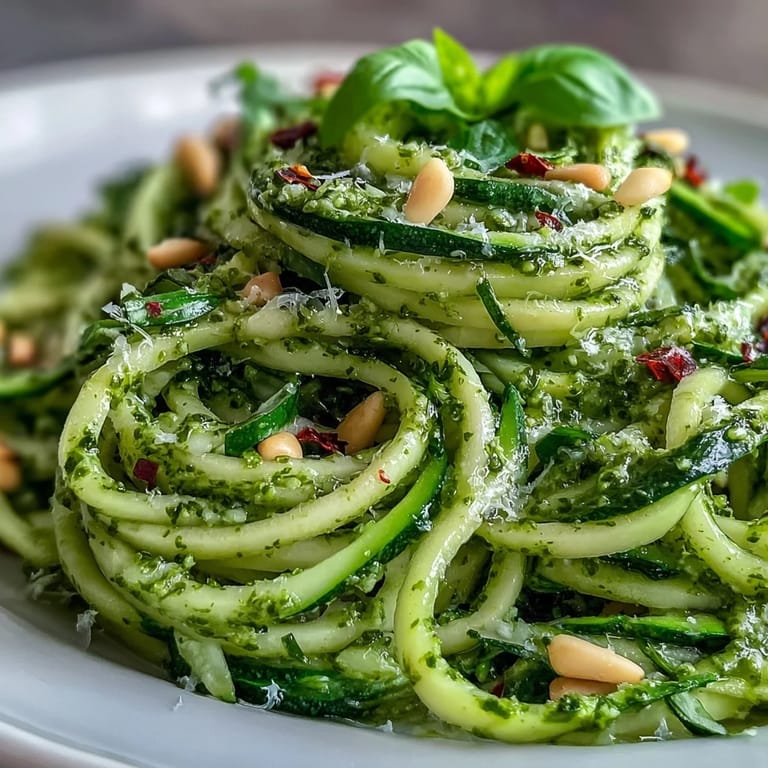
- Push each zucchini firmly through the spiralizer, creating long, consistent noodles that should look like delicate green ribbons. Set them aside and try not to worry if they look a little limp—they'll firm up slightly when they hit heat.
- Quick sauté the noodles:
- Heat olive oil in a large skillet over medium heat and add your zucchini noodles with just a pinch of salt, stirring gently for 2 to 3 minutes until they're tender but still have a slight bite. You're looking for a moment between raw and mushy, which happens fast, so don't walk away.
- Toss and serve:
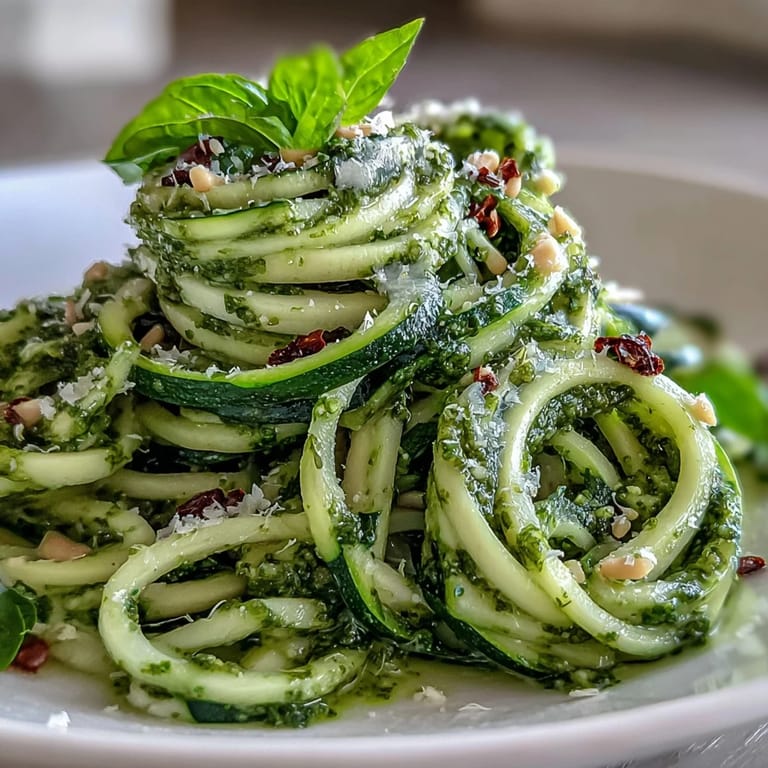
- Remove from heat, let cool for just a breath, then add your pesto and toss everything together gently until the noodles are coated. Divide between plates and top with extra Parmesan, fresh basil, and red pepper flakes if you like a little heat.
 Save
Save There's something deeply satisfying about watching someone take a bite of something light and vibrant and seeing their whole face relax, like they weren't expecting to enjoy themselves this much. This dish has that effect—it feels nourishing without feeling restrictive, which is somehow rarer than it should be.
The Pesto Philosophy
Pesto is one of those sauces that teaches you something about cooking the moment you make it, because it changes depending on what you add and in what order. The key is respecting each ingredient individually before they all come together—taste the basil alone, notice how pine nuts have their own subtle sweetness, understand how lemon juice wakes everything up. Once you've made pesto a few times, you stop following recipes and start trusting your instincts, which is when you realize you can make it with whatever herbs you have on hand, whatever nuts are in your pantry, and it will still be delicious.
Making It Your Own
The beauty of this dish is how easily it adapts to what you have and what you're craving in the moment. Cherry tomatoes add a burst of acidity and freshness, grilled chicken transforms it into something more substantial, or a soft-boiled egg on top turns it into comfort food. Experiment without guilt—this is the kind of recipe that welcomes improvisation because its foundation is so solid.
Timing and Technique Secrets
Speed matters with this recipe, not because it's complicated but because the window between perfect and waterlogged is genuinely about three minutes. Have everything prepped before you touch the skillet—pesto made, plates ready, garnishes within arm's reach. The whole experience is more enjoyable when you're not scrambling halfway through.
- Make your pesto up to a day ahead and store it in a jar, which actually gives the flavors time to get to know each other better.
- If your zucchini releases a lot of water, you can gently pat the noodles with a clean kitchen towel before cooking to remove excess moisture.
- Serve everything in warmed bowls to keep the dish feeling intentional and special, not rushed.
 Save
Save This dish reminds me why I cook in the first place: to create something alive and colorful that brings people together without apology. Make it often.
Recipe Questions
- → How do I prevent zucchini noodles from becoming watery?
Sauté the noodles briefly for 2-3 minutes until just tender. Avoid overcooking, and serve immediately to prevent water release. Patting spiralized zucchini dry with paper towels before cooking also helps maintain texture.
- → Can I make the pesto ahead of time?
Absolutely. Prepare the pesto up to 5 days in advance and store in an airtight container in the refrigerator. The flavors often develop and intensify after a day or two. Drizzle a thin layer of olive oil on top to prevent oxidation and maintain vibrant green color.
- → What substitutions work for pine nuts?
Walnuts offer a similar buttery texture and earthy flavor. Cashews provide creaminess, while sunflower seeds work excellently for nut-free versions. Each alternative brings its own subtle character while maintaining the pesto's rich consistency.
- → Is this dish suitable for meal prep?
Store pesto and zucchini noodles separately for best results. The pesto keeps refrigerated for up to a week. Spiralized zucchini can be prepped 1-2 days ahead, though freshest when cooked immediately. Toss together just before serving for optimal texture.
- → How can I add more protein to this dish?
Grilled chicken breast, shrimp, or white beans complement the flavors beautifully. For vegetarian options, add chickpeas or incorporate hemp seeds into the pesto for an extra protein boost. The light pesto sauce pairs well with most proteins without overpowering them.