 Save
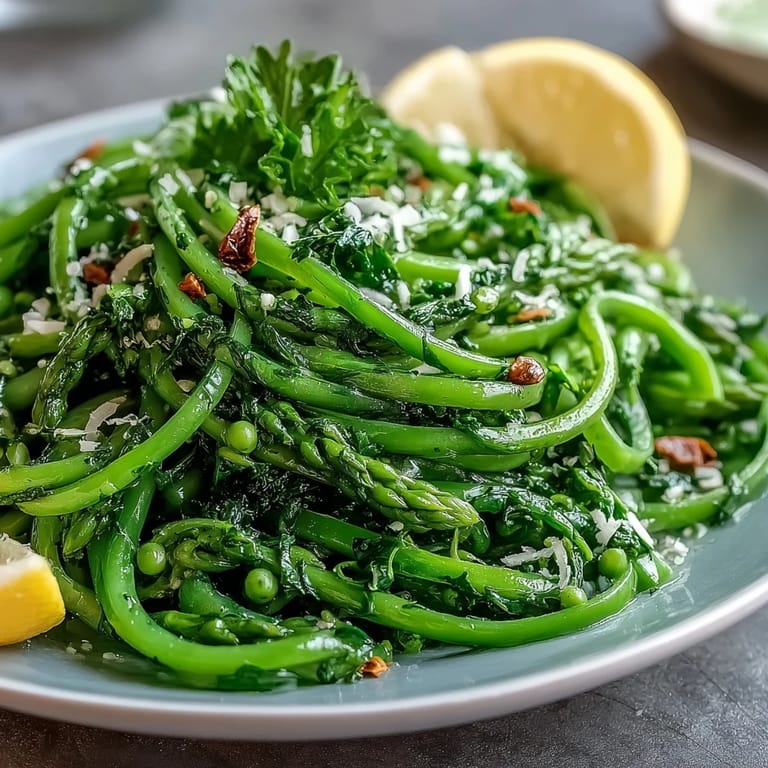
Save There's a moment every spring when I open the farmers market bag and catch that grassy snap of fresh asparagus—it's the smell of the season turning green again. That's when this salad gets made at my house, usually on a Friday afternoon when I'm tired of winter cooking and craving something that tastes like sunlight on a plate. My neighbor once asked what made this salad different from every other spring mix situation, and I realized it was the shaving—that one small technique transforms asparagus from a side dish into something delicate and almost unexpected. The lemon dressing pulls everything together without weighing it down, letting each vegetable shine without apology.
I made this for my sister's book club last May, and someone actually asked for the recipe before dessert was served—which almost never happens. What surprised me was how the peas and radishes created these little pops of sweetness and bite that kept people reaching for more. My friend Sarah, who usually avoids salads, went back for seconds and admitted she'd been wrong about her entire salad life up to that point. Those moments remind me that sometimes the simplest food, made with attention and fresh ingredients, becomes the one people actually remember.
Ingredients
- Fresh asparagus (about 300 g): Look for firm spears with tight tips—the fresher they are, the more tender the shavings will be when you peel them with a vegetable peeler.
- Green peas (1 cup): Fresh or frozen both work beautifully here; frozen peas often have better flavor than fresh ones that have traveled, and they thaw gently into the warm salad.
- Baby arugula or mixed spring greens (2 cups): Choose tender varieties—the delicate leaves get lost if you use something too hearty, and they wilt slightly from the warm dressing in the best way.
- Radishes (2): Slice them thin so they distribute evenly and deliver that crisp, peppery snap to each bite without overwhelming the plate.
- Shaved Parmesan cheese (1/4 cup): Use a vegetable peeler or cheese slicer rather than grating—thin shards melt slightly and distribute more elegantly than powder would.
- Toasted pine nuts or slivered almonds (1/4 cup): Toast them yourself if you can; the difference in flavor is worth the extra two minutes, and the kitchen will smell like butter and nuts.
- Extra-virgin olive oil (3 tbsp): This is where quality matters—choose one you actually enjoy tasting on its own, because you will taste it in every bite.
- Freshly squeezed lemon juice (2 tbsp): Bottled juice will work, but fresh lemon brings a brightness that bottled simply cannot match, so squeeze it yourself if possible.
- Lemon zest (1 tsp): The zest is where all the invisible perfume lives—don't skip it even though it seems small.
- Honey or maple syrup (1 tsp): Just a touch to round out the acidity and help the dressing come together as a unified whole.
- Dijon mustard (1 tsp): An emulsifier that makes the dressing cling to vegetables instead of pooling at the bottom of the bowl.
- Sea salt and freshly ground black pepper: Season to taste—I usually add a tiny bit more salt than the recipe calls for since fresh vegetables can handle it.
Tired of Takeout? 🥡
Get 10 meals you can make faster than delivery arrives. Seriously.
One email. No spam. Unsubscribe anytime.
Instructions
- Shave the asparagus with intention:
- Hold each spear at an angle and run a vegetable peeler down the length, listening for that satisfying sound of thin ribbons peeling away. You'll get maybe three to four ribbons per spear, and they'll pile up in your bowl like delicate green ribbons.
- Gather your vegetables:
- Toss the asparagus ribbons with the peas, greens, and radishes in a large bowl—this is where it starts looking like something special. The colors should be bright enough that you notice them.
- Build the dressing in stages:
- Whisk the olive oil, lemon juice, and zest together first, then add the honey and mustard while whisking so everything emulsifies into a unified dressing rather than separating into oil and liquid. The mustard does quiet work here—it's an invisible binder that makes everything stick together.
- Dress gently and taste as you go:
- Drizzle the dressing over the salad and toss with a light hand—these vegetables are delicate and don't need rough handling. Taste a piece of asparagus and adjust the salt or lemon to your preference before adding cheese and nuts.
- Finish with texture and richness:
- Scatter the Parmesan shards and toasted nuts over the top, either tossed through or arranged on top depending on how you want to serve it. I usually do a final gentle toss, then taste one more time.
- Serve within minutes of dressing:
- The salad is best eaten soon after you dress it, when everything is still crisp and hasn't started to wilt. If you're making it ahead, keep the dressing separate and add it just before serving.
 Save
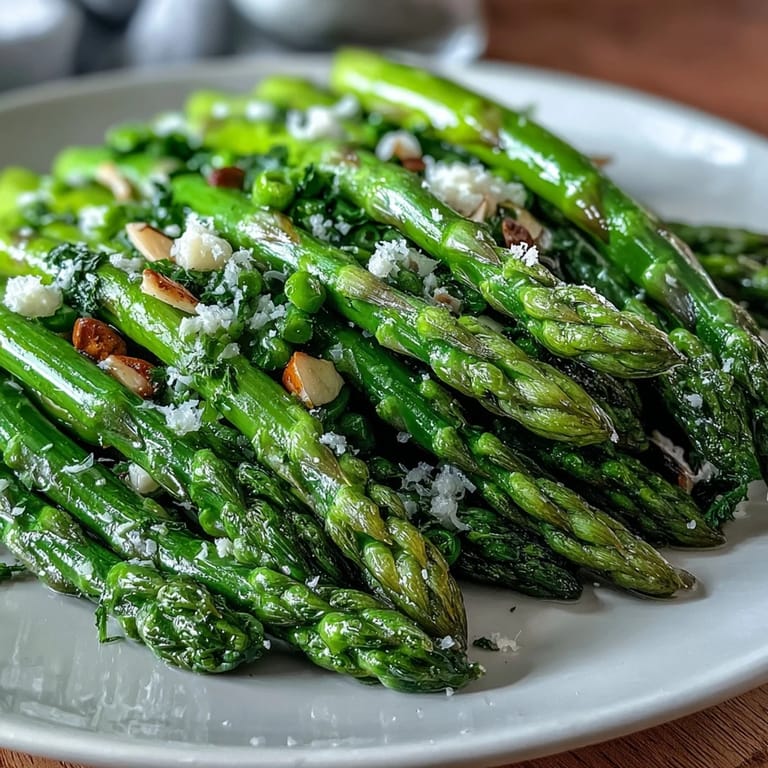
Save My daughter once asked why we don't have salad for dessert, standing in front of this bowl with a fork in hand looking entirely serious. It was one of those kitchen moments where someone outside your head says exactly what you were feeling—that salad can be exciting and light and totally worth eating, not just something you finish before the good stuff arrives.
The Magic of the Vegetable Peeler
I spent years cutting asparagus into bite-sized pieces before someone finally showed me this technique, and I genuinely felt annoyed at myself for not thinking of it sooner. The peeler transforms the entire vegetable into something almost tender enough to eat raw—which, of course, you are doing. Once you try it this way, going back to the knife-and-board method feels wrong, like you've discovered a shortcut that changes everything about how you approach vegetables.
Building Brightness Without Heat
This salad taught me that you don't need cooking to create depth and complexity in a dish—sometimes the right combination of fresh ingredients and a well-balanced dressing creates more nuance than something you spent an hour tending on the stove. The brightness here comes from layering flavors: the sharpness of lemon, the peppery bite of arugula, the delicate sweetness of peas, and the subtle crunch of radishes all playing together without any single note overpowering the rest. It's like a chord struck on a piano rather than a single note played over and over.
Variations and Moments of Flexibility
The beauty of this salad is that it welcomes changes depending on what you have and what season is calling to you. I've made it with sugar snap peas when asparagus wasn't quite in season, and I've scattered torn fresh herbs over the top on days when my garden was overflowing with mint and basil. Sometimes I add grilled chicken or a soft-boiled egg to turn it into a meal rather than a side, and sometimes I serve it exactly as written because sometimes simpler is exactly what you need.
- Substitute sugar snap peas, fava beans, or even sliced fennel for variety without changing the essential character of the dish.
- Add fresh mint, basil, or tarragon if you have them—herbs only strengthen this salad's claim to springtime.
- Serve alongside grilled fish or chicken, or add a soft-boiled egg if you want to turn it into a complete meal rather than a supporting player.
 Save
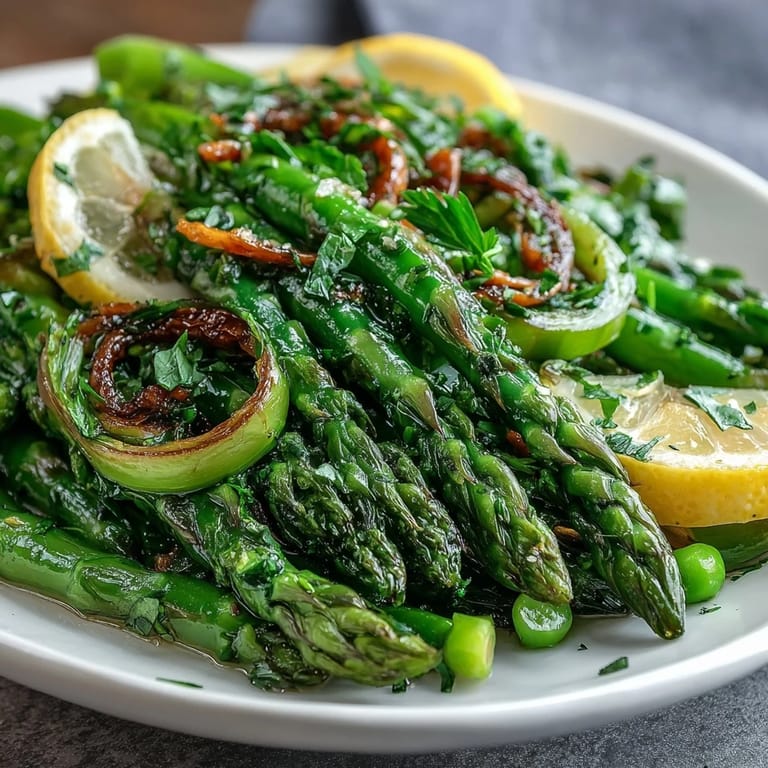
Save This salad has become my answer to the question of what to bring when someone asks you to contribute something to dinner. It travels well, tastes fresh, and reminds people that vegetables deserve the same respect and attention we give to anything else we cook.
Recipe Questions
- → What is the best way to shave asparagus?
Use a vegetable peeler to create thin, ribbon-like slices by running it along the asparagus stalks, which enhances texture and presentation.
- → Can I substitute the nuts in this salad?
Yes, toasted pine nuts can be swapped for slivered almonds or omitted for nut-free preferences without sacrificing crunch.
- → How should the dressing be prepared?
Whisk together olive oil, lemon juice, zest, honey, Dijon mustard, salt, and pepper until emulsified for a bright, balanced lemon dressing.
- → Are there vegan alternatives to the cheese?
Plant-based cheeses or simply omitting the shaved Parmesan offer vegan-friendly options while maintaining flavor contrast.
- → What can I serve this salad with for a full meal?
This salad pairs well with grilled fish or chicken, adding freshness and crunch alongside heartier mains.
- → How long can this salad be stored?
Best enjoyed fresh, but it can be refrigerated for up to a day; toss gently before serving to redistribute dressing.