 Save
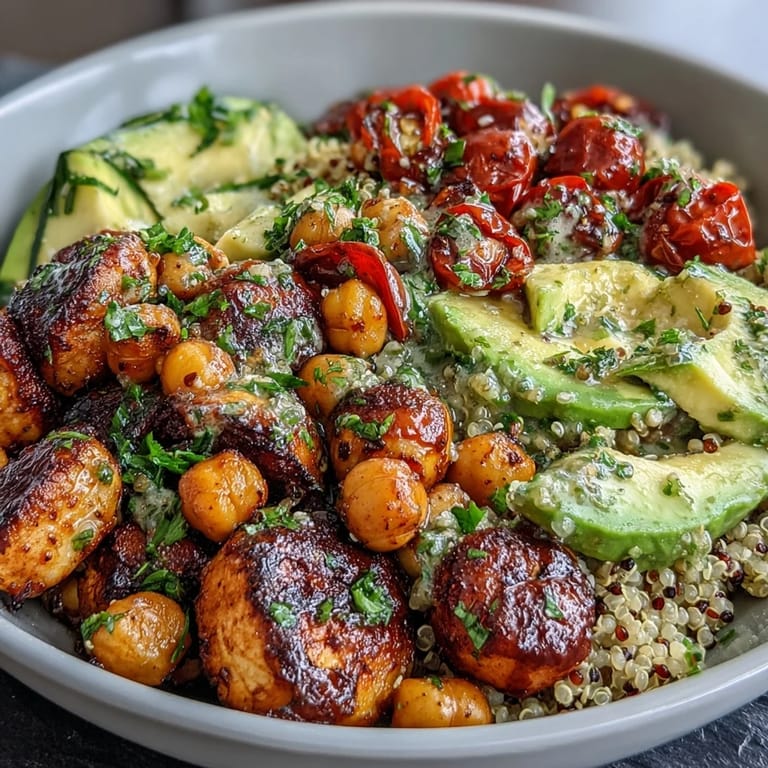
Save My kitchen smelled like toasted cumin the afternoon a friend stopped by unannounced, and instead of scrambling for something fancy, I threw together whatever vegetables were lingering in my crisper drawer with some chickpeas I'd been meaning to roast. She took one bite of that bright, lemony bowl and asked for the recipe before she'd even finished eating. That moment taught me that the best meals aren't always planned—they're the ones that come together with whatever's on hand, elevated by a good vinaigrette and the confidence to just go for it.
I made this for my partner's coworkers at a potluck, and it was the only dish that came home completely empty—not a grain of quinoa left in the bowl. What surprised me most wasn't just that everyone loved it, but how many people came back asking if it was complicated to make, genuinely shocked when I told them it was dead simple. That's when I realized this recipe's real magic: it looks like you spent hours in the kitchen when really you just needed good ingredients and a little organization.
Ingredients
- Quinoa (or brown rice or farro): Choose whichever grain speaks to you—quinoa cooks fastest and has a pleasant nuttiness, but brown rice brings earthiness and farro adds chew if you're not avoiding gluten.
- Chickpeas: Canned and drained works perfectly, though I've started rinsing mine extra well to remove that starchy coating and get them drier before roasting.
- Olive oil (for roasting): Don't splurge on your fancy extra virgin here; regular olive oil handles the heat better and won't taste burnt.
- Smoked paprika and cumin: These two spices are the difference between plain roasted beans and something that tastes intentional—the smokiness is crucial.
- Cherry tomatoes: Halving them instead of leaving them whole helps the dressing coat them better, and they stay from getting too watery in the bowl.
- Cucumber and carrots: The crispness of these vegetables is essential, so use the freshest ones you can find and prep them close to serving time.
- Red onion: Thinly slice it and consider soaking it in a bit of lemon juice for a few minutes before adding to the bowl—it mellows the bite and adds even more brightness.
- Avocado: Add this last, right before eating, or it'll turn that sad shade of brown and nobody wants that.
- Fresh parsley: Don't skip this or use dried herbs; the fresh herbal note it adds is what brings the whole bowl together.
- Extra virgin olive oil (for dressing): Now's the time to use the good stuff—you'll taste the difference in the final vinaigrette.
- Fresh lemon juice: Bottled works in a pinch, but fresh lemon juice makes the dressing taste alive and sharp instead of muted.
- Dijon mustard: This acts as an emulsifier, helping the oil and lemon juice blend together smoothly instead of separating.
- Maple syrup or honey: Just a touch of sweetness rounds out the tartness of the lemon and makes the vinaigrette more complex.
Tired of Takeout? 🥡
Get 10 meals you can make faster than delivery arrives. Seriously.
One email. No spam. Unsubscribe anytime.
Instructions
- Heat your oven and prep:
- Preheat to 425°F and line a baking sheet with parchment paper so your chickpeas won't stick and cleanup won't be a nightmare.
- Start the grains:
- Bring your quinoa (or grain of choice), water, and salt to a boil in a saucepan, then cover and reduce heat to simmer for about 15 minutes until the liquid is absorbed and the grains are tender. Let it sit off the heat for a minute, then fluff everything with a fork.
- Dry and season the chickpeas:
- Pat the drained chickpeas completely dry with a clean kitchen towel—this step is what gets them crispy instead of steamed. Toss them in olive oil, then add all the spices and seasonings, making sure every single bean gets coated.
- Roast until golden:
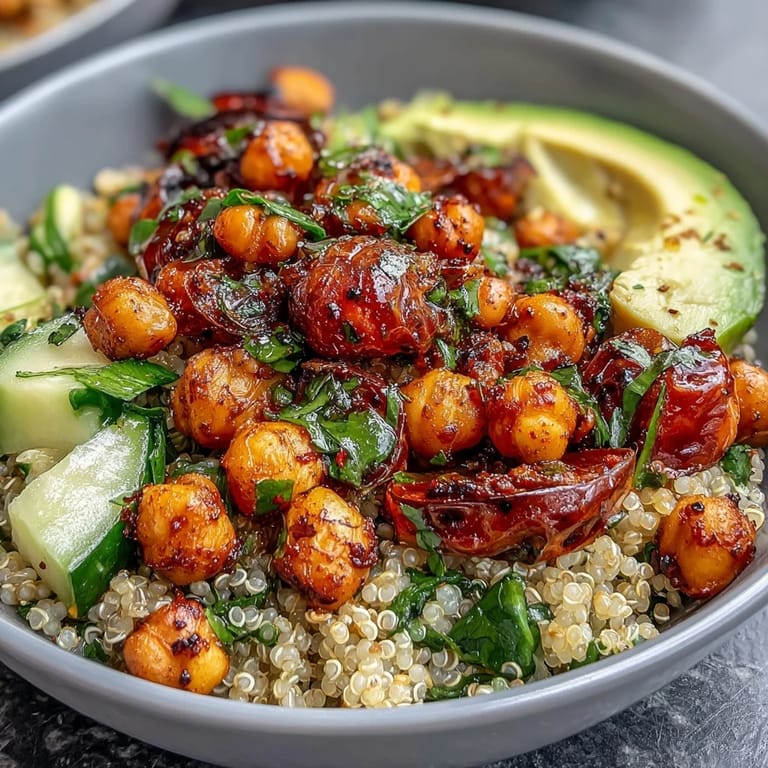
- Spread the chickpeas on your baking sheet in a single layer and roast for 20 to 25 minutes, shaking the pan halfway through so they cook evenly. They'll smell absolutely amazing when they're done, and they should be golden and crunchy when you cool them slightly.
- Build your vinaigrette:
- Whisk together the olive oil, lemon juice, mustard, sweetener, garlic, salt, and pepper in a small bowl or jar until it looks emulsified and creamy. Taste it and adjust the lemon or salt to your preference—this is where the magic lives.
- Assemble everything:
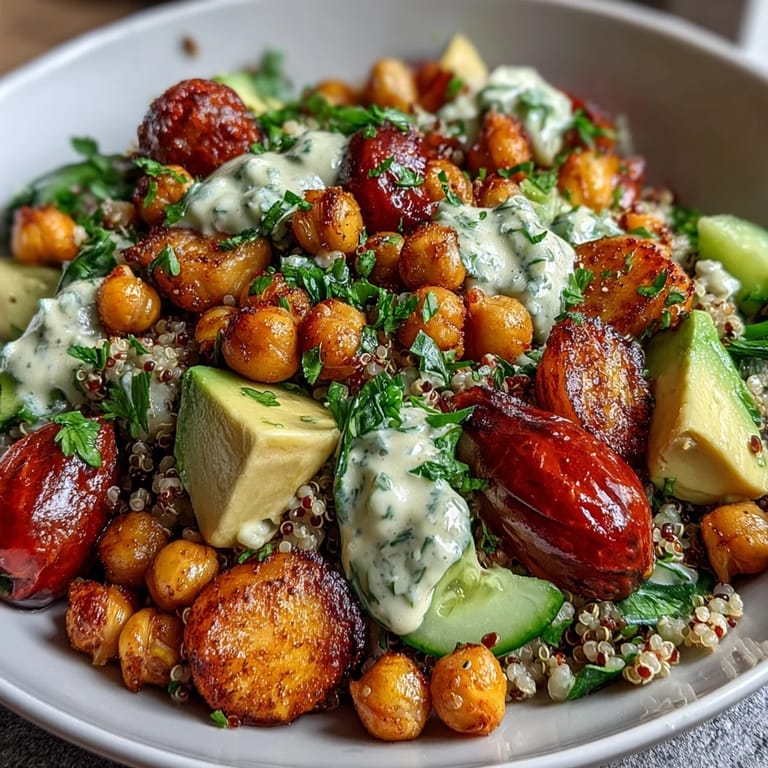
- Divide the warm grains among four bowls, then arrange all your vegetables and the roasted chickpeas on top, scattering the fresh parsley last. Drizzle generously with the lemon vinaigrette right before eating and serve immediately while everything is still at its best.
 Save
Save My mom tasted this bowl and said it reminded her of eating lunch at a little Mediterranean café we visited years ago, and suddenly we were both transported back to that sunny afternoon, talking about traveling again someday. That's when I understood that feeding people well is really about more than nutrition—it's about creating small moments that stick with them, little flashes of joy delivered in a bowl.
Grain Substitutions That Work Beautifully
While quinoa is my default because it cooks quickly and has a light, slightly fluffy texture, don't feel locked in. Brown rice brings an earthier, nuttier quality and works especially well if you're roasting everything together; farro adds a satisfying chew and holds up beautifully to the vinaigrette without getting mushy. Barley is another excellent choice with a slightly sweet undertone, though you'll want to check if you need gluten-free grains. The beauty of this bowl is that it adapts to whatever grain you have in your pantry and still tastes completely intentional.
The Vinaigrette Is Everything
I learned this the hard way by making the same bowl with a weak, underseasoned dressing and wondering why it tasted flat. A good vinaigrette is what takes a collection of vegetables and transforms them into something cohesive and craveable. The ratio of three parts oil to one part acid (here, the lemon juice) is the foundation, but that mustard and touch of sweetness are what round everything out and make people ask for seconds.
Make-Ahead Strategy and Storage
I prep my vegetables and grains in advance on Sunday, then assemble the bowls fresh when I'm ready to eat—this keeps everything crisp and prevents the grains from drying out. The vinaigrette keeps for three or four days in the refrigerator in a sealed jar, actually getting more flavorful as it sits. Store the roasted chickpeas in an airtight container and eat them within a day or two if you want that perfect crispiness, though they're still delicious if they soften up after that.
- Make the vinaigrette up to four days ahead and simply shake before using.
- Roast your chickpeas and cook your grains the day before for quick assembly.
- Slice your avocado just before serving to prevent browning.
 Save
Save This bowl has become my answer to that late-afternoon question of what's for dinner, the one I can make without thinking too hard and still feel proud serving. It's nourishing without feeling like punishment, satisfying without being heavy, and it tastes like you actually know what you're doing in the kitchen.
Recipe Questions
- → What grains work best for these bowls?
Quinoa, brown rice, farro, bulgur, and barley all work well; choose based on your preference or dietary needs.
- → How do I get crispy roasted chickpeas?
Pat chickpeas dry before tossing with oil and spices, then roast at 425°F (220°C) for 20-25 minutes, shaking halfway for even crispiness.
- → Can I make the lemon vinaigrette in advance?
Yes, the vinaigrette can be prepared ahead and stored in the fridge for up to 2 days; whisk before serving.
- → What can I add for extra creaminess?
Crumbled feta or goat cheese adds creaminess but omit for a vegan variation.
- → Are there allergen concerns with mustard or grains?
Dijon mustard is included in the vinaigrette, and gluten may be present if using farro or barley; use gluten-free grains if needed.