 Save
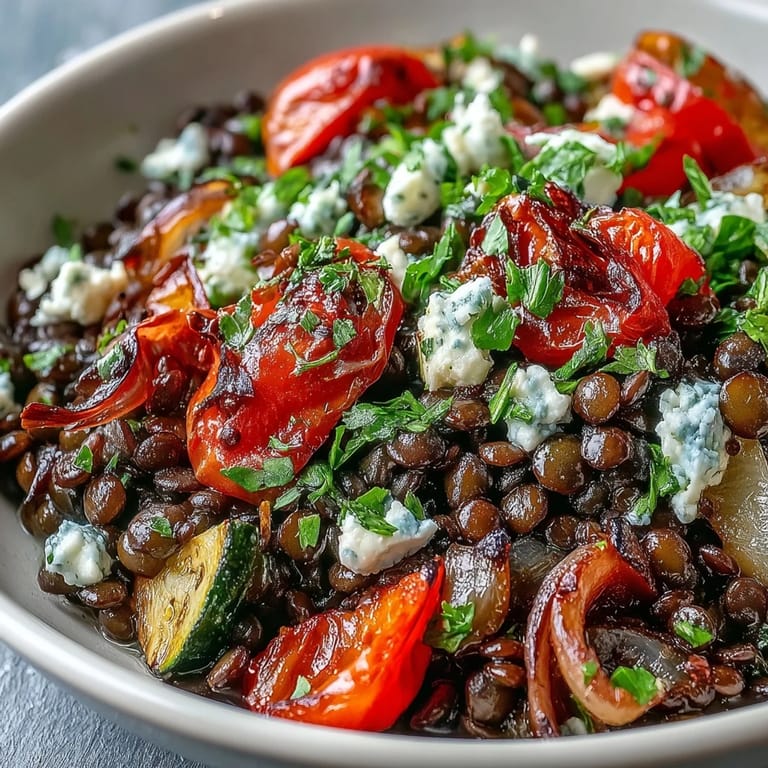
Save I discovered black lentil salad entirely by accident one autumn when my farmers market haul included a bag of beluga lentils I'd never tried before. Standing in my kitchen with a pile of roasted vegetables cooling on a sheet pan, I decided to toss everything together with lemon and olive oil, not expecting much. That first forkful—the way the earthy lentils held their shape while the caramelized vegetables brought this unexpected sweetness—changed how I thought about lunch entirely.
I made this for a potluck once where everyone was bringing complicated dishes, and I nearly didn't go because salad felt too simple. But when it was gone by the halfway point and three people asked for the recipe, I realized that sometimes the most satisfying food is the one that doesn't pretend to be anything other than what it is—fresh, honest, and made with attention.
Ingredients
- Black lentils (beluga lentils): These small, shiny lentils hold their shape beautifully during cooking, unlike brown or red varieties which can fall apart and turn your salad mushy.
- Water and bay leaf: The bay leaf adds a subtle depth that keeps the lentils from tasting flat, so don't skip it even though it seems minimal.
- Red bell pepper: Roasting brings out natural sugars that contrast perfectly with the earthy lentils and bright lemon.
- Zucchini: It becomes tender and slightly caramelized at the edges, adding body without heaviness.
- Red onion: Wedges work better than dices here because they stay intact during roasting and add visual interest.
- Carrot: A touch of natural sweetness that rounds out the flavor profile.
- Olive oil for roasting: Use regular olive oil here, not extra-virgin, since it can handle the heat without getting bitter.
- Fresh parsley: Chopped just before serving so it keeps its vibrant color and fresh bite.
- Feta cheese: Crumbled generously gives you little pockets of creaminess that make each bite feel indulgent.
- Extra-virgin olive oil for dressing: This is where you use the good stuff—it makes an actual difference when it's the main flavor component.
- Fresh lemon juice: Bottled simply won't give you the same brightness, so commit to squeezing real lemons.
- Dijon mustard: A small amount acts as an emulsifier and adds complexity without announcing itself.
- Honey: Just enough to balance the acidity and bring the other flavors into harmony.
Tired of Takeout? 🥡
Get 10 meals you can make faster than delivery arrives. Seriously.
One email. No spam. Unsubscribe anytime.
Instructions
- Start your oven and prep the vegetables:
- Preheat to 425°F—this temperature is hot enough to caramelize the vegetables quickly without drying them out. Dice everything into roughly the same size so they roast evenly, and don't be stingy with the olive oil or seasoning at this stage.
- Get the vegetables golden:
- Spread them on a sheet pan, toss well to coat, and roast for 25 to 30 minutes, stirring halfway through. You're looking for the edges to turn golden brown and the vegetables to soften enough that a fork slides through easily.
- Cook the lentils while vegetables roast:
- Rinse them under cold water first, then place in a saucepan with the water and bay leaf. Bring to a rolling boil, then drop the heat and let them simmer gently—this usually takes about 20 to 25 minutes. You want them tender but still holding their shape, not breaking apart when you stir.
- Make the dressing while everything cooks:
- Whisk together the olive oil, lemon juice, mustard, minced garlic, and honey in a small bowl. Taste it and adjust—add salt, pepper, or more lemon until it tastes bright and balanced, like something you'd want to drink.
- Bring it all together:
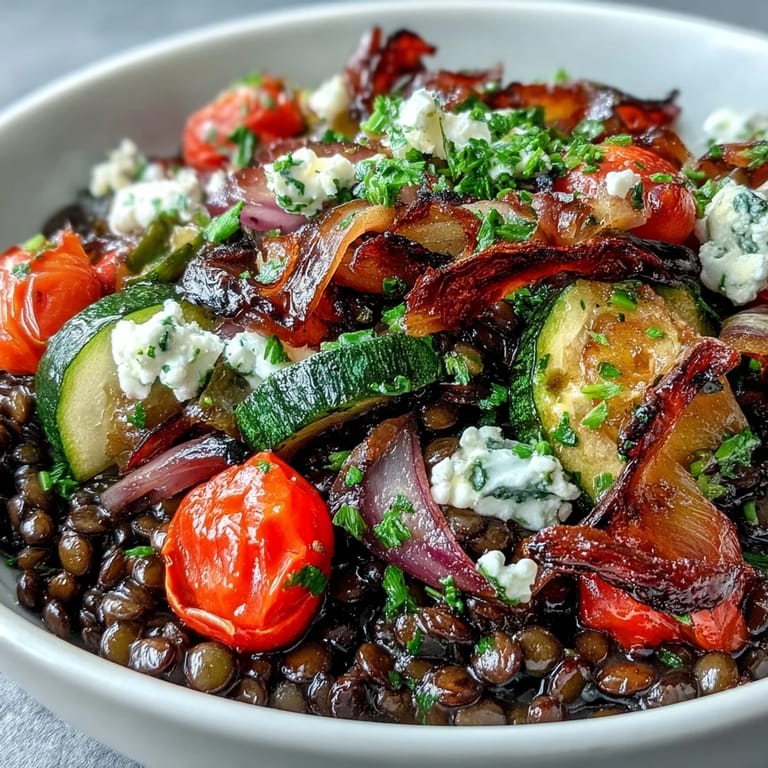
- Drain the lentils and stir in the salt while they're still warm, which helps them absorb the seasoning. Combine the warm lentils with the roasted vegetables, cherry tomatoes, and parsley in a large bowl, then drizzle the dressing over and toss gently so everything mingles but nothing gets crushed.
- Finish and serve:
- Add feta if you're using it, and taste once more for seasoning. This salad works warm, at room temperature, or even cold from the refrigerator, so serve it however suits your moment.
 Save
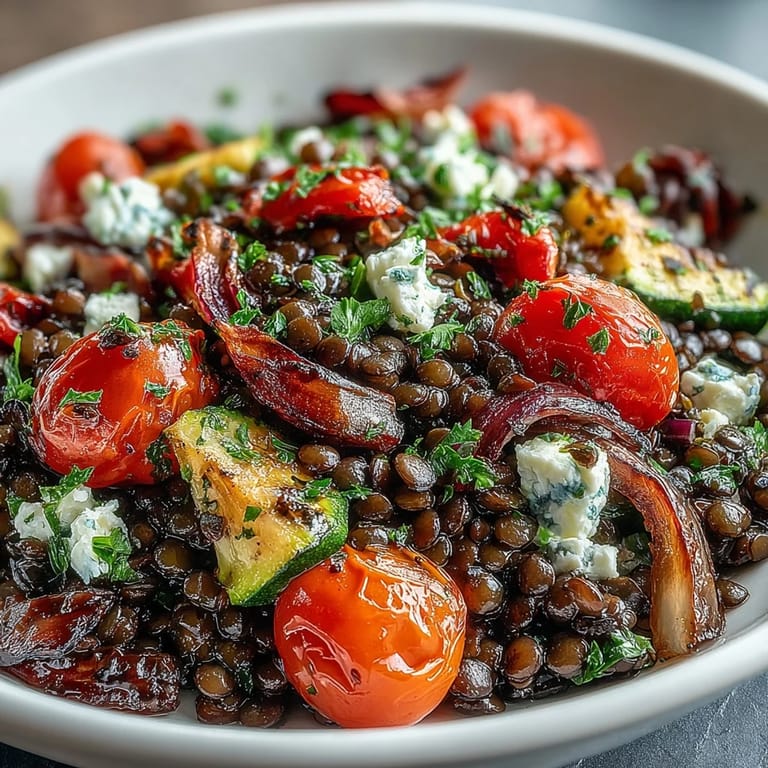
Save One quiet weeknight when I was eating this salad alone at my kitchen counter, I noticed how satisfying it felt to eat something so visibly full of vegetables and care. There's something grounding about a bowl of food where you can see every ingredient and taste how they work together.
Why Black Lentils Are the Right Choice
Black lentils—also called beluga lentils because of their resemblance to caviar—have a firm texture and slightly peppery flavor that makes them ideal for salads. Unlike red lentils which dissolve into mush or green lentils which can taste metallic, black lentils maintain their integrity and actually improve in flavor as they cool. I've made this salad with other varieties out of necessity, and while it still tastes good, the texture never quite has the same satisfaction.
The Magic of Room Temperature
Serving this salad at room temperature rather than cold is one of those small decisions that sounds silly until you actually experience the difference. Cold lentils become dense and the dressing congeals slightly, but room temperature allows the flavors to open up and the textures to feel more alive. If you're making this ahead, pull it from the refrigerator 15 minutes before serving and you'll taste the difference immediately.
Variations and Flexibility
This salad is genuinely adaptable without losing what makes it good, which is why I keep making it even when my vegetables change seasonally. In summer I add arugula, in spring I'll toss in fresh herbs like dill, and sometimes I layer grilled chicken on top for something more substantial. What stays constant is the balance between the earthy lentils, the sweet vegetables, and the bright dressing—everything else is just you cooking according to what's available and what you're hungry for.
- Add spinach or arugula for extra greens without overwhelming the other flavors.
- Swap vegetables based on season—roasted Brussels sprouts, cauliflower, or eggplant all work beautifully.
- Make it vegan by using tahini in the dressing or omitting the feta entirely, and the salad loses nothing.
 Save
Save This recipe became one of my go-to salads because it proves that good food doesn't require complicated techniques or exotic ingredients—just real vegetables, quality olive oil, and attention. Make it once and you'll understand why it keeps showing up on my table.
Recipe Questions
- → Can I use other types of lentils?
Black beluga lentils work best because they hold their shape during cooking. Green or brown lentils are acceptable substitutes, though they may soften slightly more. Red lentils will become too mushy for this preparation.
- → How long does this salad keep in the refrigerator?
Store in an airtight container for up to 4 days. The lentils absorb the dressing beautifully over time, making leftovers even more flavorful. Add fresh parsley just before serving if it looks wilted.
- → Can I roast the vegetables ahead of time?
Absolutely. Roast vegetables up to 2 days in advance and refrigerate. Bring to room temperature before combining with lentils. You may want to make fresh dressing to brighten the flavors.
- → What proteins pair well with this salad?
Grilled chicken, salmon, or shrimp work beautifully. For a plant-based protein boost, add chickpeas, hemp seeds, or chopped walnuts. The Mediterranean flavors complement most proteins wonderfully.
- → How do I know when the lentils are done?
Taste test after 20 minutes. Beluga lentils should be tender but still retain a slight bite in the center—like al dente pasta. Overcooking will make them mushy and less pleasant in the salad.
- → Can I make this dish vegan?
Simply omit the feta cheese or replace it with a plant-based crumbly alternative. The rest of the dish is naturally vegan and packed with protein from the lentils alone.