 Save
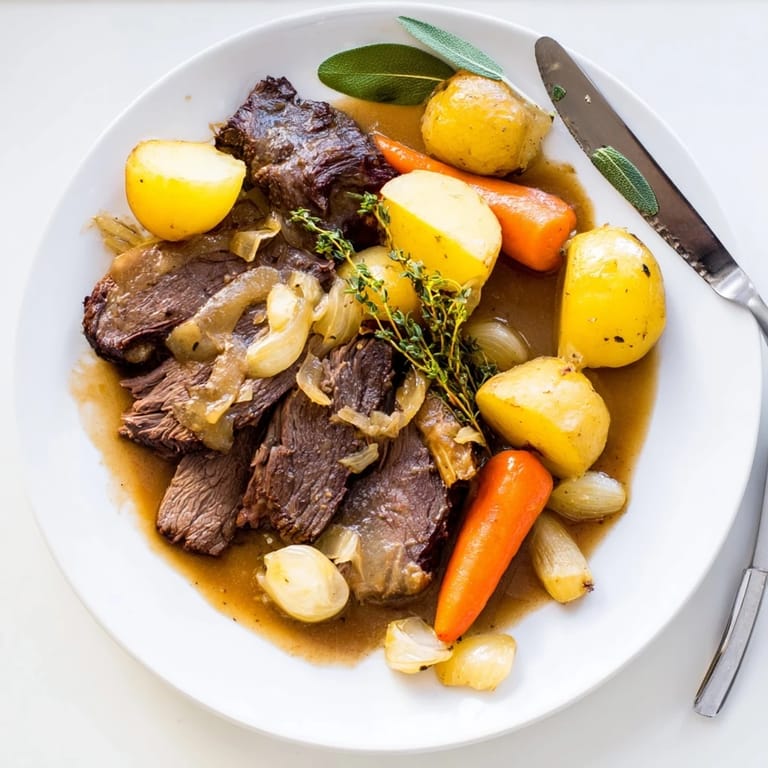
Save The first time I made pot roast, I lived in this tiny apartment where the oven temperature was never what the dial said. My roommate and I had found a chuck roast on sale at the market, and we decided to attempt something that felt like grown-up cooking. Three and a half hours later, the entire building smelled like slow-cooked comfort. That night, leaning against the kitchen counter while the beef fell apart at the mere suggestion of a fork, I understood why this dish has graced Sunday tables for generations.
Last winter, my sister came over after a terrible week at work, and I put a pot roast in the oven before she even arrived. When she walked through the door, shoulders dropped and exhausted, the smell hit her first. We ate straight from the platter, standing in the kitchen, and somewhere between the tender beef and those wine-infused carrots, everything felt manageable again. Food has this way of holding space for us when we need it most.
Ingredients
- Chuck roast: This cut has the perfect marbling for slow cooking, breaking down into silky tenderness while staying moist
- Kosher salt and black pepper: Dont be shy here, this is your foundation for building flavor throughout the long braise
- Olive oil: You need a neutral oil with a decent smoke point for that crucial sear that creates depth
- Yukon Gold potatoes: They hold their shape better than Russets during long cooking and develop this creamy texture inside
- Large carrots: Cut them into substantial pieces so they dont dissolve into the gravy
- Yellow onions: They become sweet and unrecognizable, melting into the sauce as everything braises
- Garlic: Smashed cloves release their flavor slowly, infusing the whole dish without any harsh bite
- Beef broth: Use a good quality one, or better yet, homemade if you have it stashed in your freezer
- Dry red wine: The alcohol cooks off completely, leaving behind this complexity that broth alone cannot achieve
- Tomato paste: It concentrates and deepens the gravy, adding this subtle richness that people notice but cannot place
- Worcestershire sauce: That umami punch that makes everything taste more like itself
- Dried thyme and bay leaves: Classic herbs that have been paired with beef forever because they just work
- Flour or cornstarch: Your gravy thickener, whisked into cold water first to prevent any lumps from forming
Tired of Takeout? 🥡
Get 10 meals you can make faster than delivery arrives. Seriously.
One email. No spam. Unsubscribe anytime.
Instructions
- Get everything ready:
- Preheat your oven to 300F, pat the beef completely dry with paper towels, and season it generously on all sides with salt and pepper.
- Create that gorgeous crust:
- Heat the olive oil in a large Dutch oven over medium-high heat until it shimmers, then sear the roast for 4 to 5 minutes per side until it is deeply browned everywhere.
- Build the flavor base:
- Add the onions and garlic to the same pot, cooking for 2 to 3 minutes until they release their fragrance and begin to soften.
- Deeglaze the pot:
- Stir in the tomato paste and let it cook for a full minute, then pour in the wine while scraping up every browned bit from the bottom.
- Assemble everything:
- Return the beef to the pot, then add the broth, Worcestershire, thyme, and bay leaves, arranging the potatoes and carrots around the roast.
- Let the oven do the work:
- Cover the pot with a tight-fitting lid and transfer to the oven to braise for 3 to 3.5 hours.
- Check for tenderness:
- The beef is done when a fork slides in with zero resistance and the vegetables yield easily.
- Make the gravy:
- Remove the beef and vegetables to a platter, skim the excess fat from the liquid, then whisk the flour and cold water until smooth before stirring it in.
- Thicken everything:
- Simmer the gravy on the stovetop over medium heat, whisking constantly for 3 to 5 minutes until it coats the back of a spoon.
- Serve it up:
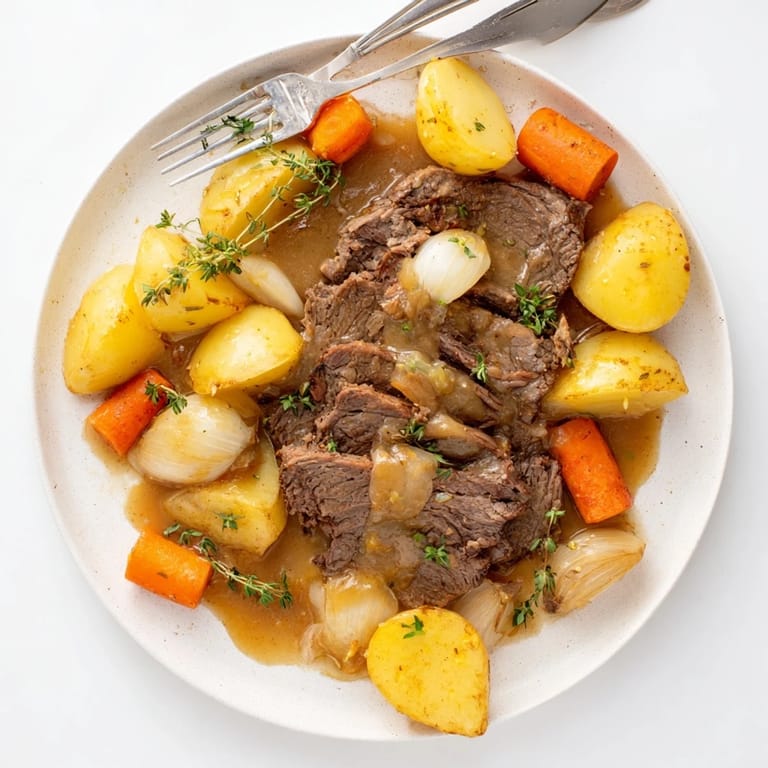
- Slice the beef against the grain and arrange everything on that platter, drowning it all in that glorious gravy you just made.
 Save
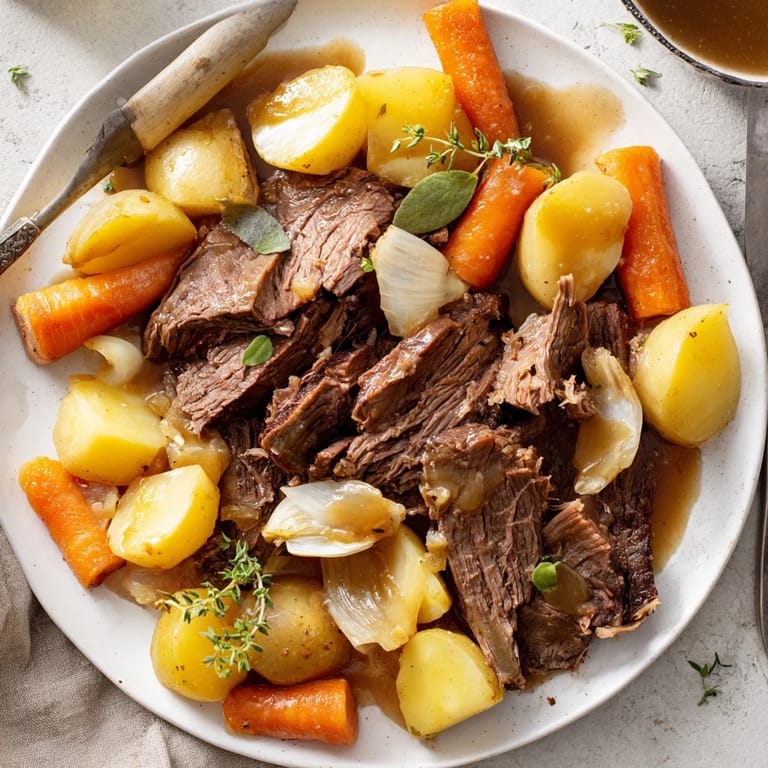
Save My grandmother used to say that a pot roast was about patience more than technique, and I finally understand what she meant. There is something almost meditative about the long, slow transformation that happens in that Dutch oven, and the way the entire house becomes a warm, fragrant invitation to gather around the table.
Choosing the Right Cut
Chuck roast is ideal because it has enough fat and connective tissue to break down during long cooking, becoming meltingly tender while staying juicy. Leaner cuts like round will dry out and become tough, no matter how long you cook them. I have learned the hard way that investing in quality beef pays off in the final result.
Wine Selection Tips
You want a dry red wine that you would actually drink, because the flavor concentrates as it braises. Cabernet Sauvignon, Merlot, or Pinot Noir all work beautifully here. If you do not cook with alcohol, just substitute additional broth, though the gravy will have a slightly different depth.
Make-Ahead Magic
Pot roast actually benefits from being made a day ahead, which gives the flavors time to meld and the fat to solidify on top for easy removal. Reheat it gently in a low oven, covered, until everything is warmed through. This makes it perfect for entertaining or Sunday meal prep.
- Cool and refrigerate the roast in the cooking liquid for the best results
- The gravy may need a splash of broth when reheating since it thickens in the fridge
- Let it come to room temperature before reheating to avoid uneven warming
 Save
Save There is nothing quite like setting a platter of pot roast on the table and watching everyone reach for the gravy boat first.
Recipe Questions
- → What cut of beef works best for pot roast?
Chuck roast is the ideal choice because it has plenty of marbling and connective tissue that breaks down during slow cooking, resulting in incredibly tender meat. Other options include brisket or round roast.
- → Can I make pot roast in a slow cooker?
Absolutely. After searing the beef and sautéing the aromatics, transfer everything to your slow cooker. Cook on low for 8-10 hours or on high for 4-6 hours until the beef is fork-tender.
- → Do I need to use wine in the braising liquid?
Not at all. While red wine adds depth and complexity, you can substitute additional beef broth or even a combination of broth and a splash of balsamic vinegar for acidity.
- → How do I know when the pot roast is done?
The beef is ready when it yields easily to a fork with minimal pressure. You should be able to pull it apart with two forks. This typically takes 3-3½ hours in the oven.
- → Can I prepare pot roast ahead of time?
Pot roast actually tastes better when made ahead. Let it cool, refrigerate overnight, then reheat gently the next day. The flavors meld and the fat solidifies for easy removal.
- → What vegetables pair well with pot roast?
Beyond the classic potatoes and carrots, try adding parsnips, celery root, turnips, or pearl onions. Add sturdy vegetables at the start and quicker-cooking ones like peas during the last 30 minutes.